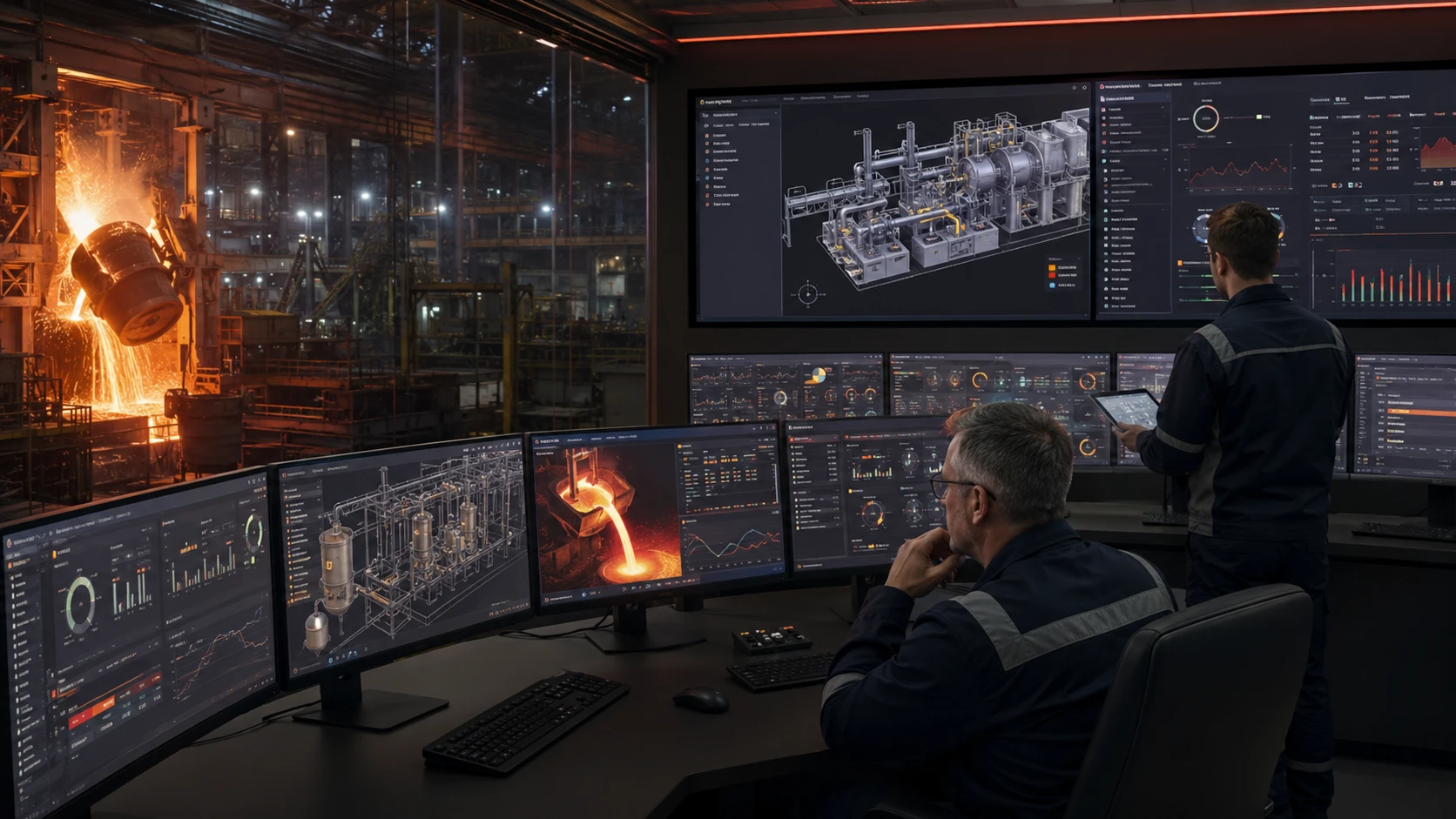
Interactive metallurgical applications
Online Model Demo Hub
Access fourteen online model families spanning induction-furnace steelmaking, BOF, EAF, stainless-steel refining, ferroalloy smelting, rotary-kiln and MIDREX DRI, blast-furnace simulation, continuous casting, iron-ore sintering, plant carbon accounting and Hall–Héroult aluminium smelting.
Purpose of this hub
Direct access to working process-model demonstrations
Each card below retains the original online model hyperlink while presenting the application in a clearer, professionally structured format.
The demonstrations illustrate how metallurgical knowledge, mass and heat balances, reaction engineering, process data and machine learning can be converted into practical analysis and decision-support tools. Availability and performance of externally hosted applications depend on their respective hosting services.
Understand
Visualize the effect of material inputs, energy supply, gas practice and operating parameters.
Predict
Estimate process states, product conditions, energy use, yield, emissions and operating endpoints.
Compare
Run alternative scenarios to examine sensitivities and identify robust operating windows.
Implement
Use the demo as a starting point for plant-specific calibration, integration and operator interfaces.
Online applications
Choose a model and launch the demonstration
Launch any model in a separate browser tab. For the Render-based Continuous Casting and Sintering twins, the complete-demo button opens both the backend service and frontend interface in parallel.
 01
Steelmaking control
01
Steelmaking control
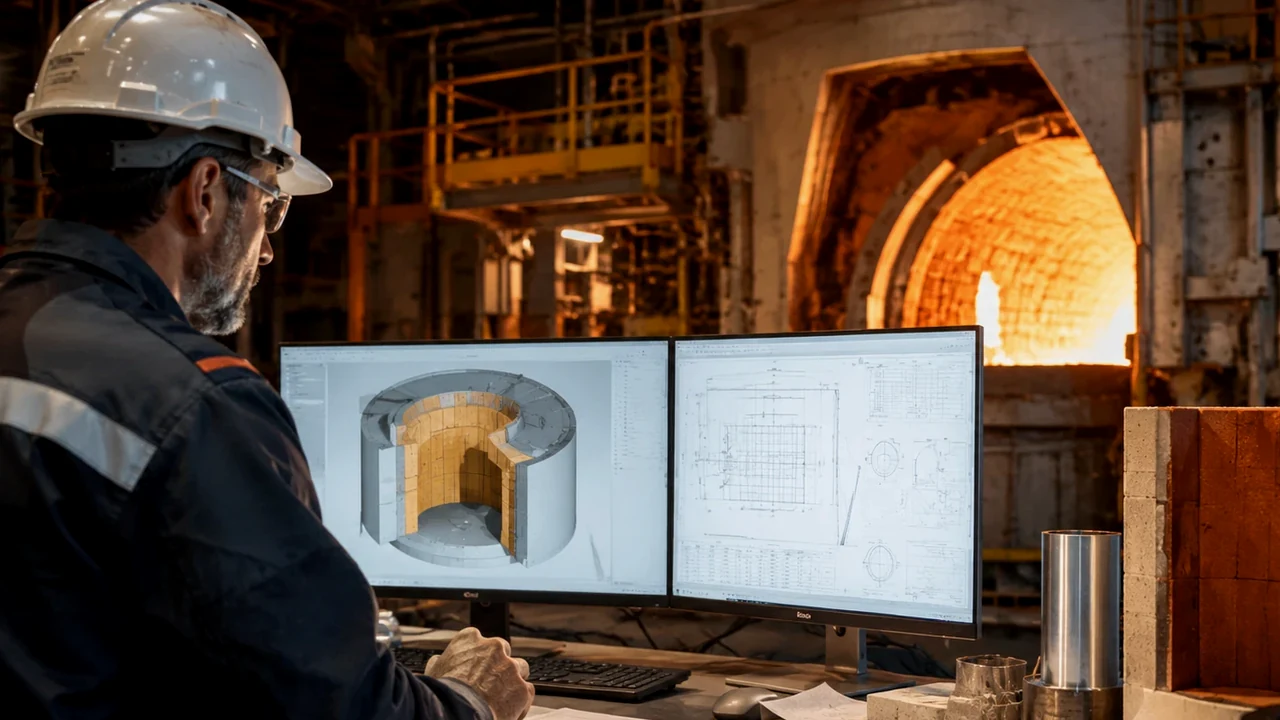
SMARTMELT — Induction Furnace Steelmaking
An operator-oriented dynamic control model for induction-furnace steelmaking, designed to track melting progress, bath temperature, steel chemistry, slag development and material additions during the heat.
- Charge and melting-state monitoring
- Dynamic metal, slag and thermal balances
- Operator guidance for additions and tapping
- Scenario analysis for plant-specific heats
 02
Oxygen steelmaking
02
Oxygen steelmaking
BOF Integrated Control Model
A process-control model for basic oxygen steelmaking that links charge conditions, oxygen-blowing practice, slag formation, decarburization and endpoint prediction.
- Hot-metal, scrap and flux input definition
- Blow-progress and reaction tracking
- Endpoint carbon and temperature prediction
- Slag condition and process-control support
 03
Electric steelmaking
03
Electric steelmaking
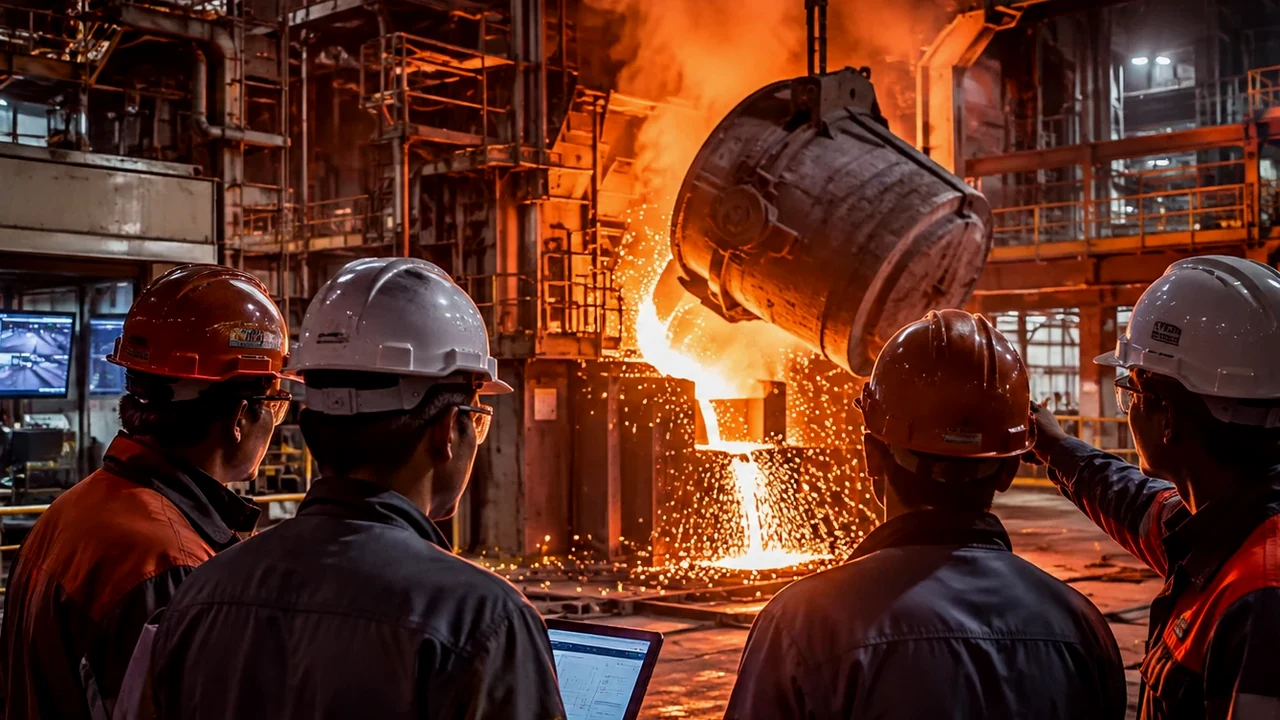
EAF Integrated Control Model
A dynamic electric-arc-furnace model covering scrap and DRI melting, electrical and chemical energy, oxygen and carbon practice, slag behaviour and tapping conditions.
- Charge-mix and melting-progress analysis
- Electrical and chemical energy balance
- Slag foaming and oxidation control
- Tap-time, yield and temperature guidance
 04
Ferroalloy smelting
04
Ferroalloy smelting
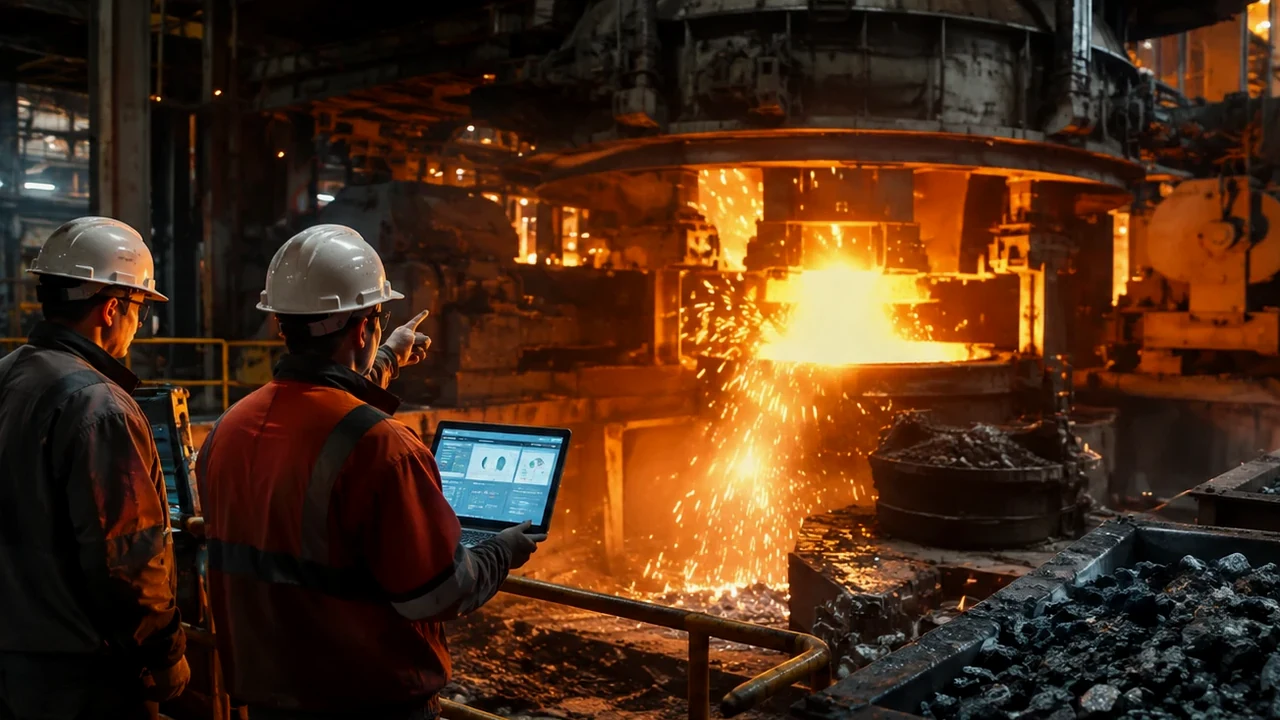
Ferrochrome Smelter Control Model
A submerged-arc-furnace decision-support model for ferrochrome production, linking ore, reductant, flux, electrical conditions, alloy recovery and slag chemistry.
- Charge-mix and reductant evaluation
- Electrical and thermal operating indicators
- Chromium recovery and alloy-yield assessment
- Slag composition and tapping support
 05
Secondary steelmaking
05
Secondary steelmaking
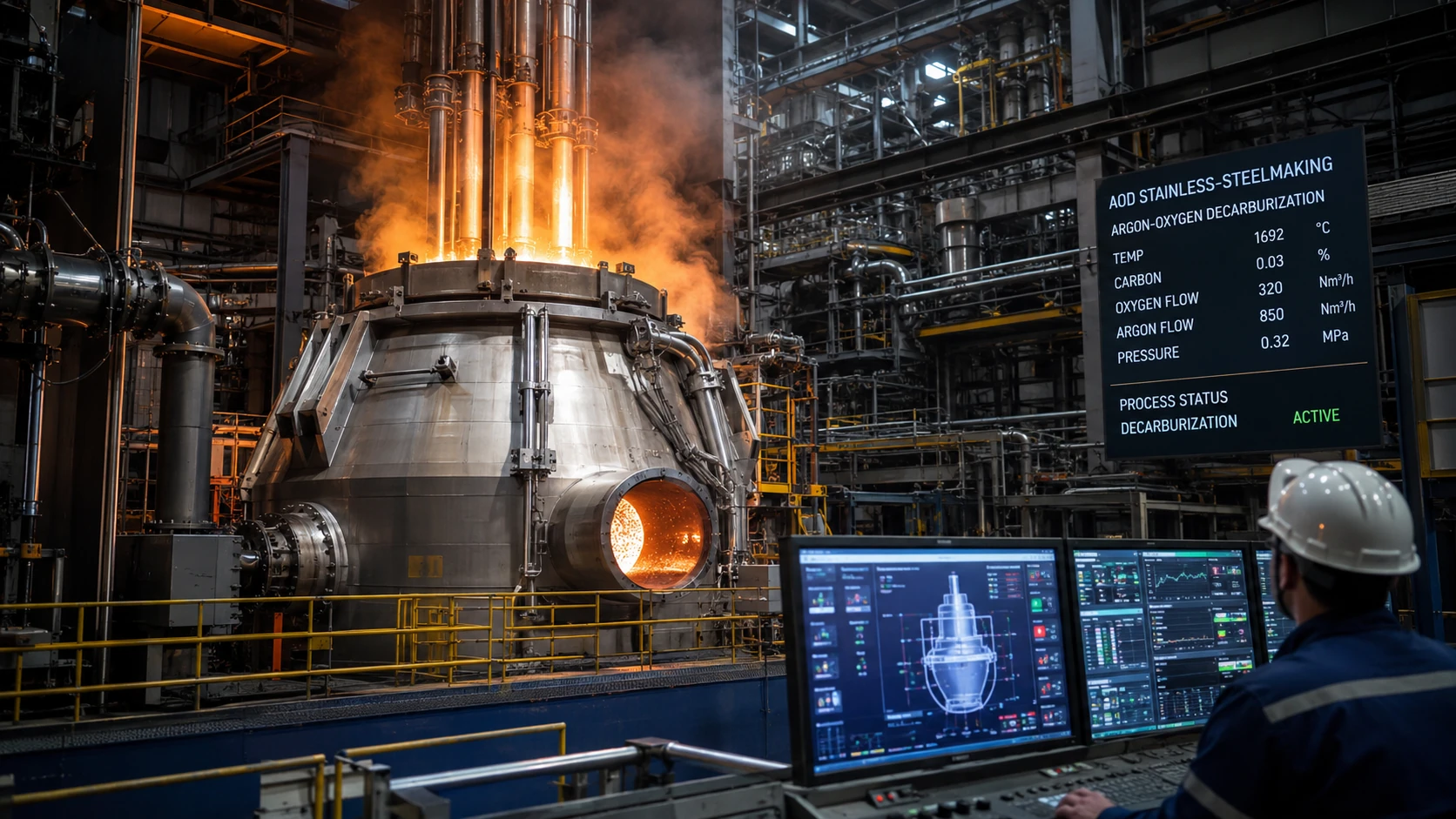
AOD Stainless-Steelmaking Control Model
A control model for argon–oxygen decarburization of stainless steel, focused on selective carbon removal, chromium retention, gas practice, thermal evolution and refining endpoint.
- Oxygen–argon blowing strategy
- Carbon removal and chromium-loss assessment
- Bath temperature and reaction evolution
- Endpoint and alloy-adjustment guidance
 06
Direct reduction
06
Direct reduction
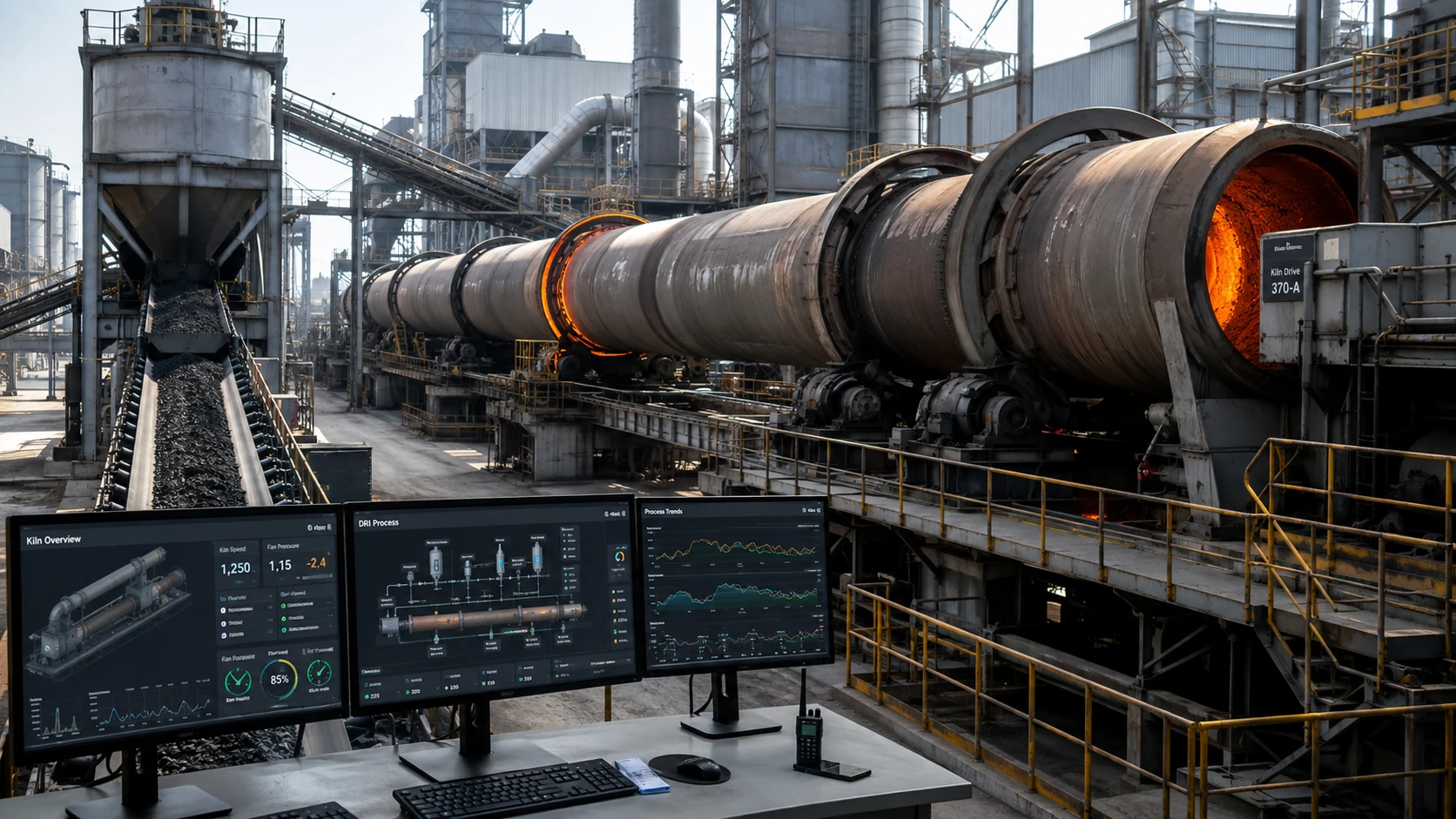
Rotary-Kiln DRI Control Model
A rotary-kiln direct-reduction model for tracking material movement, reduction progress, kiln thermal state, fuel and air practice, product metallization and operating stability.
- Ore, coal, dolomite and air inputs
- Reduction and kiln-temperature progression
- Product metallization and carbon indicators
- Fuel-use, accretion-risk and productivity support
 07Gas-based direct reduction
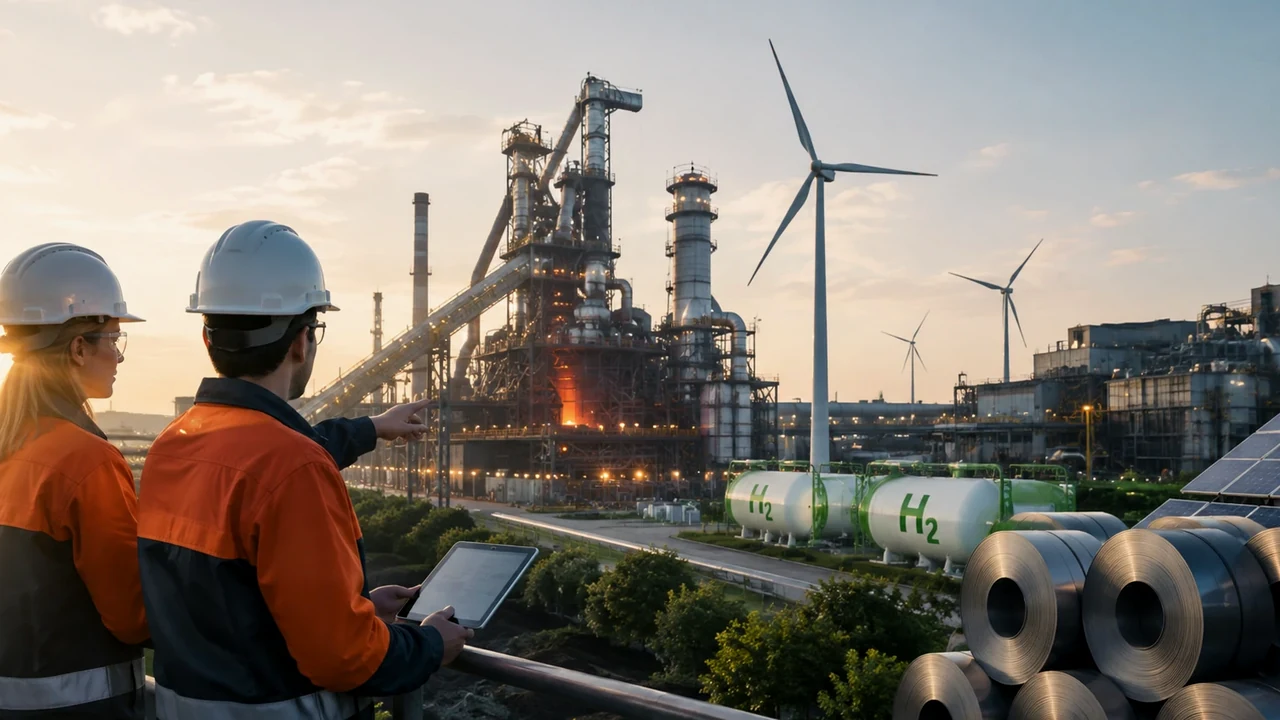
MIDREX Process DRI Making
A gas-based shaft-furnace process-control family combining first-principles thermochemistry, gas/solid balances, reduction and heat-transfer logic with plant-data calibration for static target setting and spatial process-state analysis.
- DRI production, metallization and carbon estimation
- Reducing-gas demand, utilization and exit-gas composition
- Heat-balance, bustle-gas and hydrogen-transition studies
- Static/1D target calculations and 2D spatial process analysis
 08
Blast-furnace tuyere zone
08
Blast-furnace tuyere zone
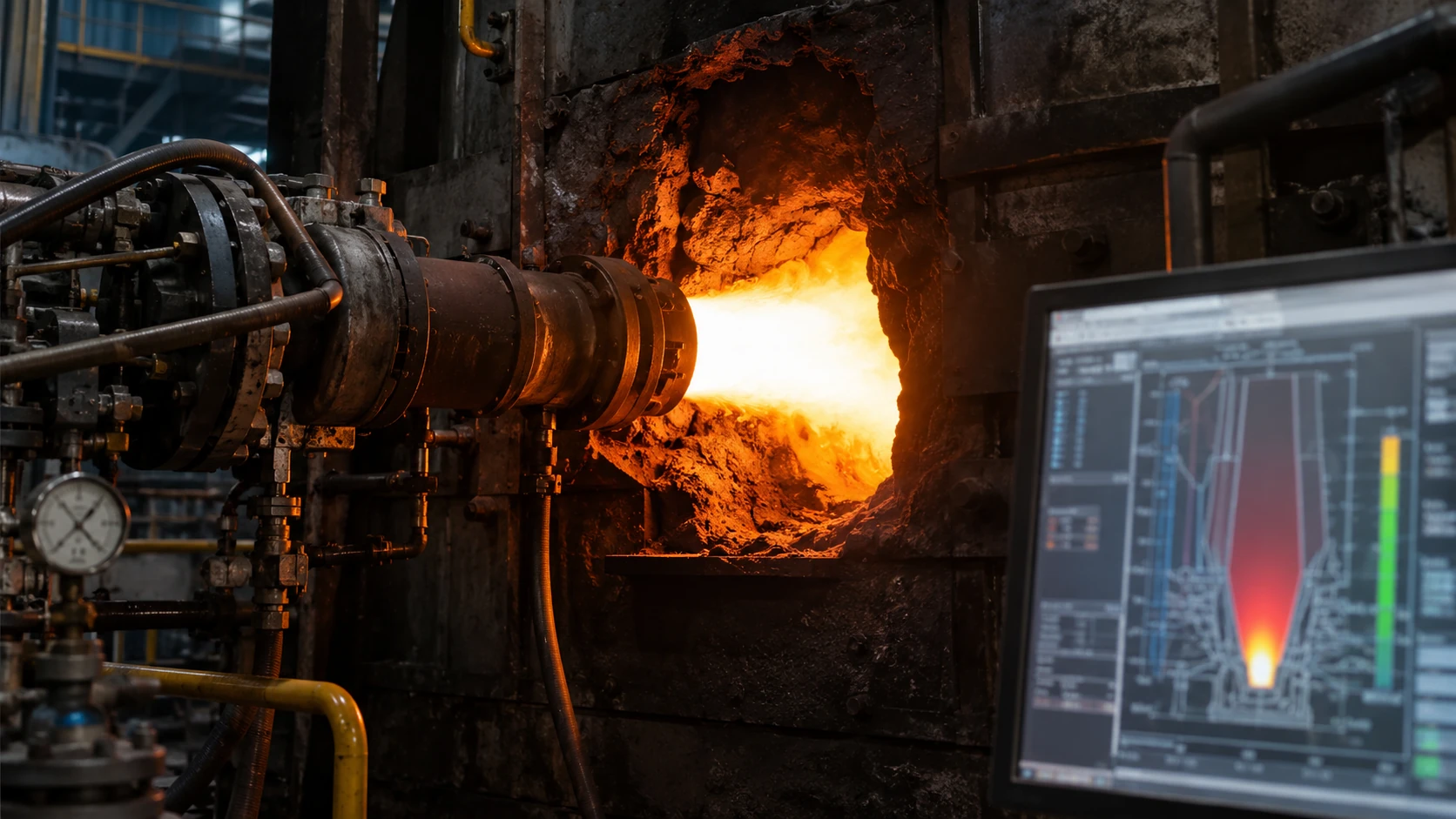
PCI–RAFT Calculation Model
A blast-furnace raceway model for estimating raceway adiabatic flame temperature and evaluating pulverized-coal injection, oxygen enrichment, blast temperature and moisture effects.
- RAFT estimation under changing blast conditions
- PCI and oxygen-enrichment sensitivity
- Tuyere-zone heat and gas calculations
- Operating-window comparison for stable furnace practice
 09
Ironmaking simulation
09
Ironmaking simulation
Blast Furnace First-Principles Simulation
A first-principles blast-furnace process simulator for integrated burden, gas, thermal and reaction analysis across the furnace, supporting fuel-rate, productivity and hot-metal studies.
- Burden, coke, PCI and blast inputs
- Gas–solid reaction and heat-balance analysis
- Top-gas, fuel-rate and productivity prediction
- Hot-metal chemistry and thermal-state assessment
 10
AI-enabled ironmaking
10
AI-enabled ironmaking
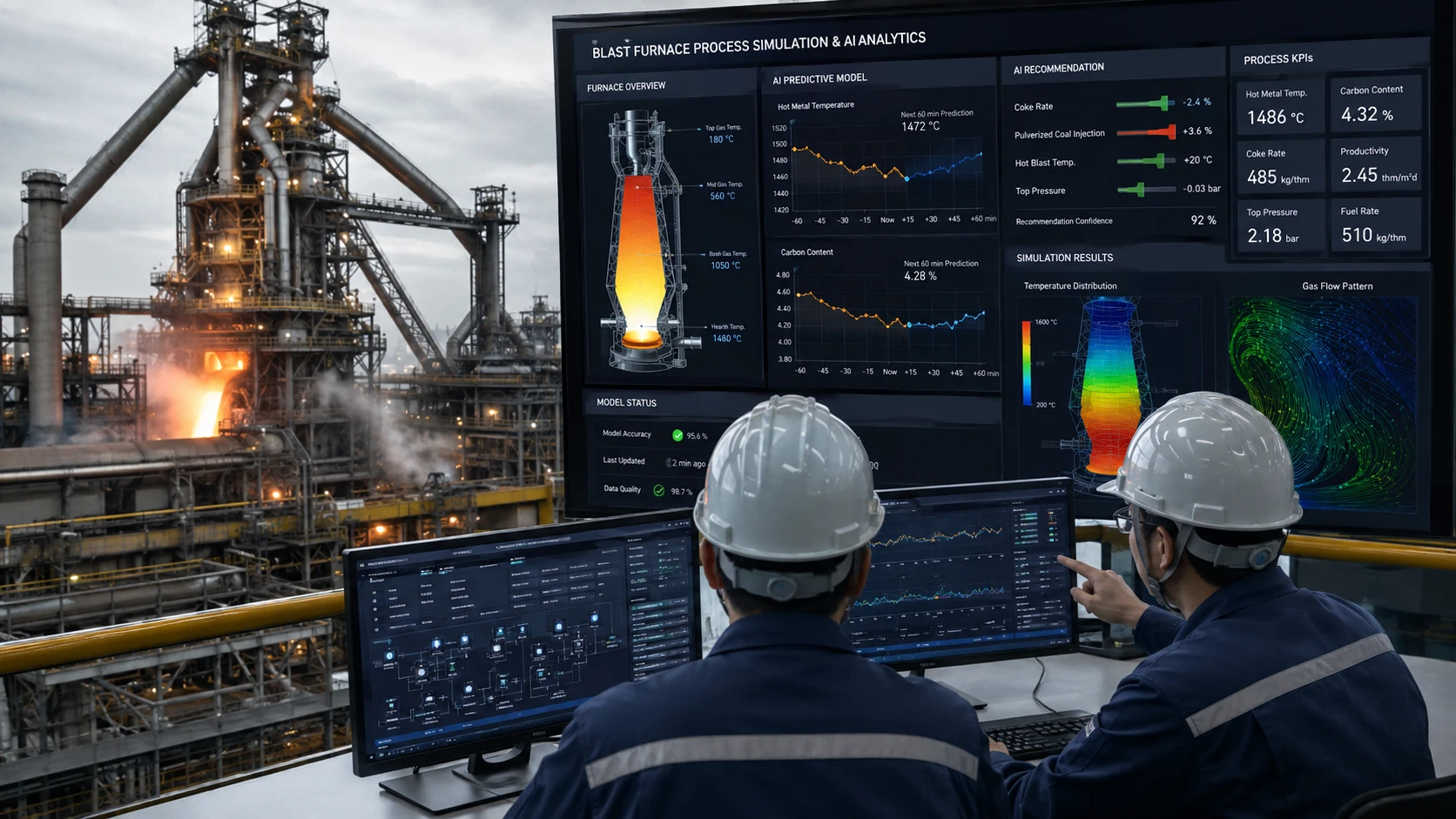
Blast Furnace Machine-Learning Simulation
A data-driven blast-furnace model that uses machine-learning relationships to study process behaviour, predict key performance indicators and support rapid operational scenario evaluation.
- Plant-data-based prediction
- Rapid what-if and sensitivity studies
- Performance and stability indicators
- Complementary use with first-principles models
 11
Decarbonization & carbon accounting
11
Decarbonization & carbon accounting
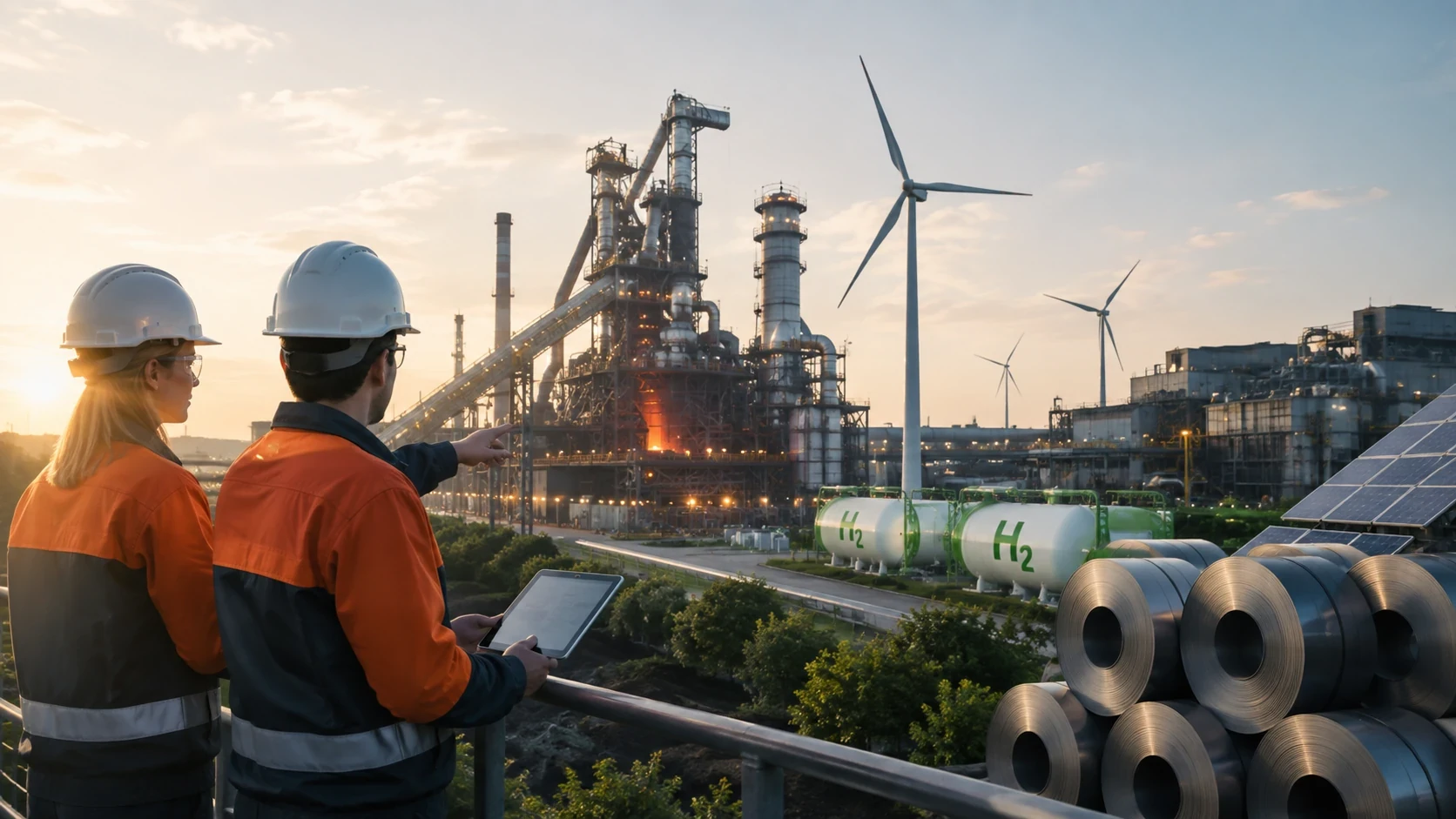
Steel Plant Carbon Footprint, Carbon Credit & Decarbonization Calculation Model
A plant-level carbon-accounting and scenario-analysis model for estimating greenhouse-gas emissions across iron and steel production, identifying major emission sources and evaluating practical decarbonization pathways.
- Plant and process carbon-footprint calculation in CO₂-equivalent terms
- Source-wise emissions breakdown for fuels, electricity, reductants and process reactions
- Comparison of decarbonization scenarios, energy substitutions and operating improvements
- Indicative carbon-credit and avoided-emission assessment subject to applicable methodology, project boundary and regulatory requirements
 12Primary aluminium smelting
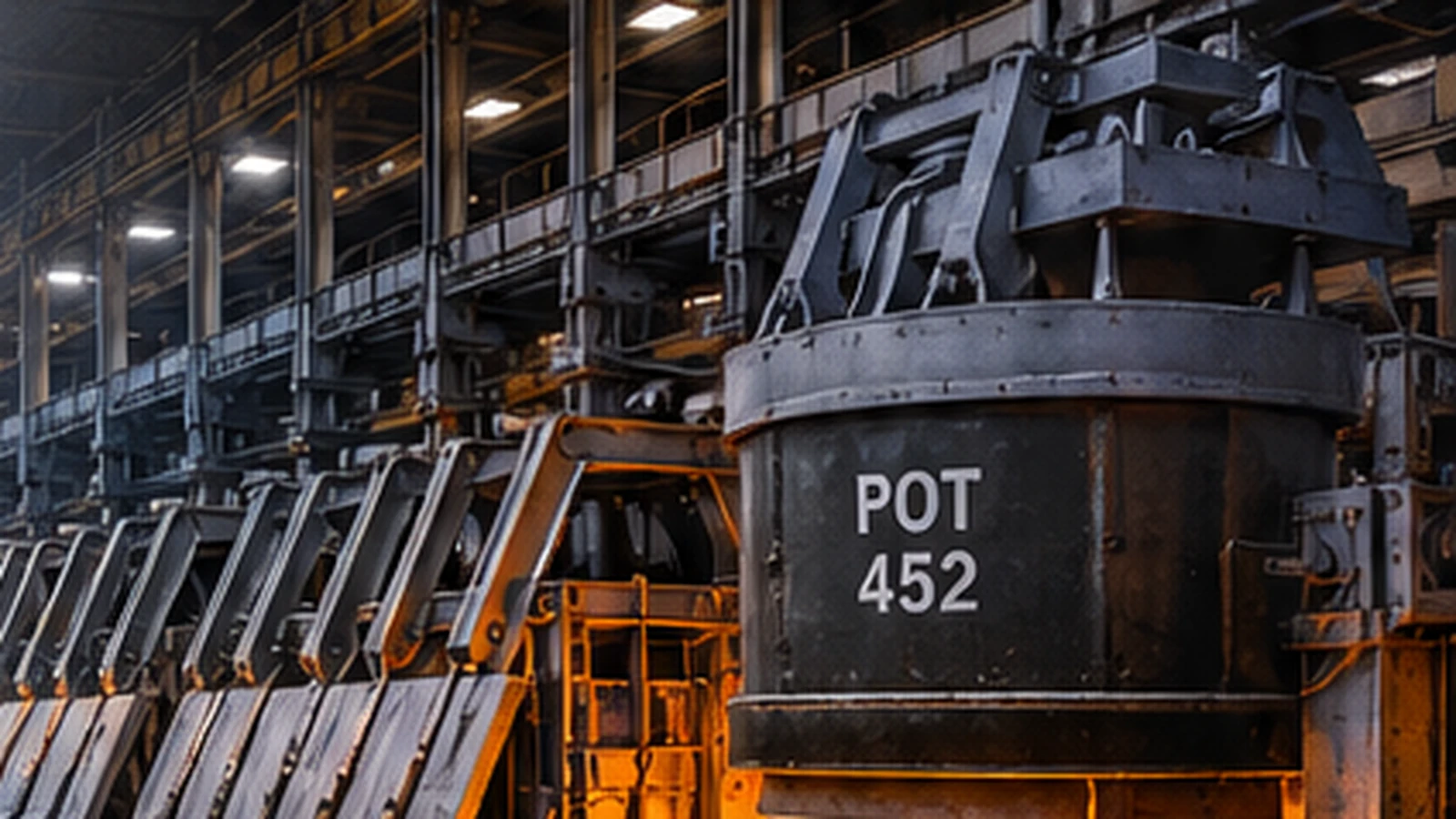
Hall–Héroult Aluminium Extraction Digital Twin
A hybrid Level-2 and digital-twin model for primary aluminium reduction cells, linking electrical, electrochemical, thermal and feeding behaviour with state estimation and predictive operator guidance.
- Cell voltage/current, alumina feed, tapping and anode-event context
- Soft sensing of dissolved alumina, ACD/resistance and thermal condition
- Current-efficiency, specific-energy and anode-effect-risk assessment
- What-if simulation, feed/ACD guidance and pot-performance optimization
 13Continuous casting
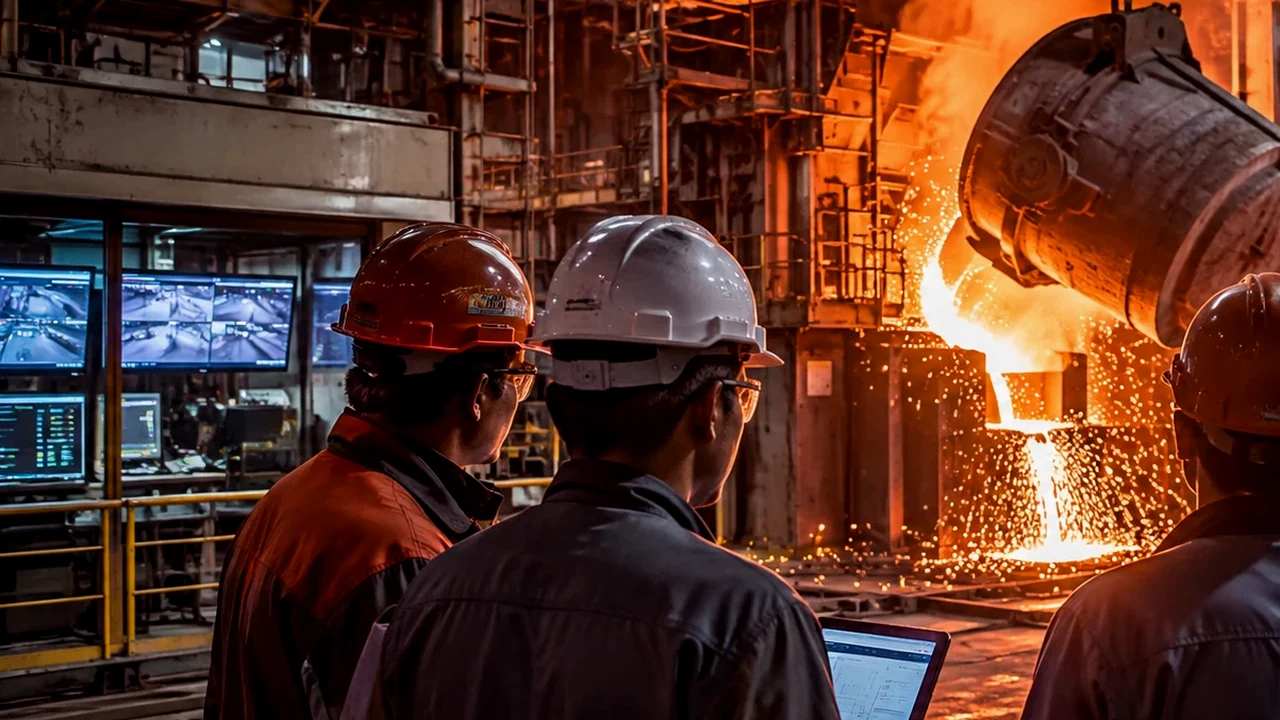
Continuous Casting Process Digital Twin
An end-to-end continuous-casting digital twin for tracking thermal state, mould and secondary-cooling behaviour, shell growth, metallurgical length and quality-risk indicators across the caster.
- Ladle/tundish superheat and casting-speed context
- Mould heat transfer, shell thickness and solidification progression
- Secondary-cooling and metallurgical-length assessment
- Scenario analysis for breakout risk, quality stability and productivity
Render note: On a cold start, allow the backend tab to wake up before refreshing or using the frontend. If your browser blocks the second tab, open the backend button first and then relaunch the frontend.
View continuous-casting twin details →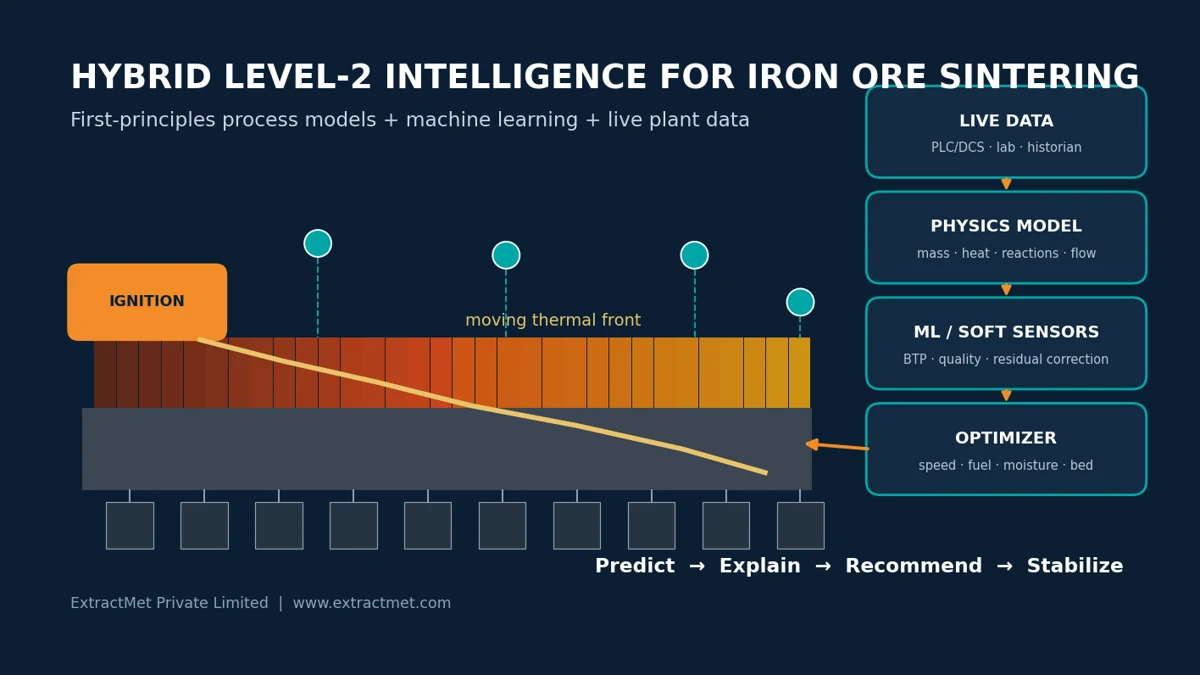 14Iron ore agglomeration
Iron Ore Sintering Process Digital Twin
A hybrid physics-and-data digital twin for sinter-bed preparation, thermal-front progression, burn-through-point prediction, permeability, productivity, fuel use and sinter-quality guidance.
- Blend, return fines, coke breeze, moisture and bed-state inputs
- Ignition and moving thermal-front / BTP prediction
- Permeability, strand speed, fuel and thermal-state assessment
- Operator guidance for productivity, quality consistency and energy efficiency
Render note: On a cold start, allow the backend tab to wake up before refreshing or using the frontend. If your browser blocks the second tab, open the backend button first and then relaunch the frontend.
Read the sintering Level-2 article →From demonstration to deployment
Plant implementation requires calibration, validation and integration
Online demonstrations provide a useful view of modelling capability. A production-grade implementation must be configured for the plant’s equipment, charge materials, operating practice, instrumentation, data quality, cybersecurity requirements and performance acceptance criteria.
Discuss a plant-specific modelDefine the operating decision
Start with a measurable problem such as endpoint accuracy, energy, yield, recovery, productivity or quality stability.
Map and validate plant data
Establish reliable inputs, sensors, laboratory data, event timing and historical operating cases.
Calibrate and test
Adjust process parameters and validate predictions against representative heats, campaigns or operating periods.
Deploy for users
Translate model outputs into operator guidance, engineering dashboards, alerts or optimization recommendations.