By ExtractMet Private Limited
Rotary-kiln direct reduced iron (DRI) remains strategically important to iron and steel production, particularly in India, where coal-based DRI has expanded rapidly. Yet the process is still one of the hardest ironmaking operations to control consistently.
The challenge is not a lack of data. Most plants already measure feed rates, kiln speed, temperatures, pressure, coal and air flows, off-gas variables, product metallization and a range of laboratory properties. The real challenge is converting these signals into a trustworthy picture of what is actually happening inside the rotating, reacting bed — now, and 20–60 minutes from now.
That is where a hybrid process-control approach becomes powerful.
At ExtractMet, we are developing plant-specific process-control and digital-twin solutions for rotary-kiln DRI that combine first-principles metallurgy with machine learning and plant data. The objective is not another dashboard. It is an engineering decision layer that can estimate hidden process states, predict product and stability risks, compare corrective actions and support operators with explainable guidance.
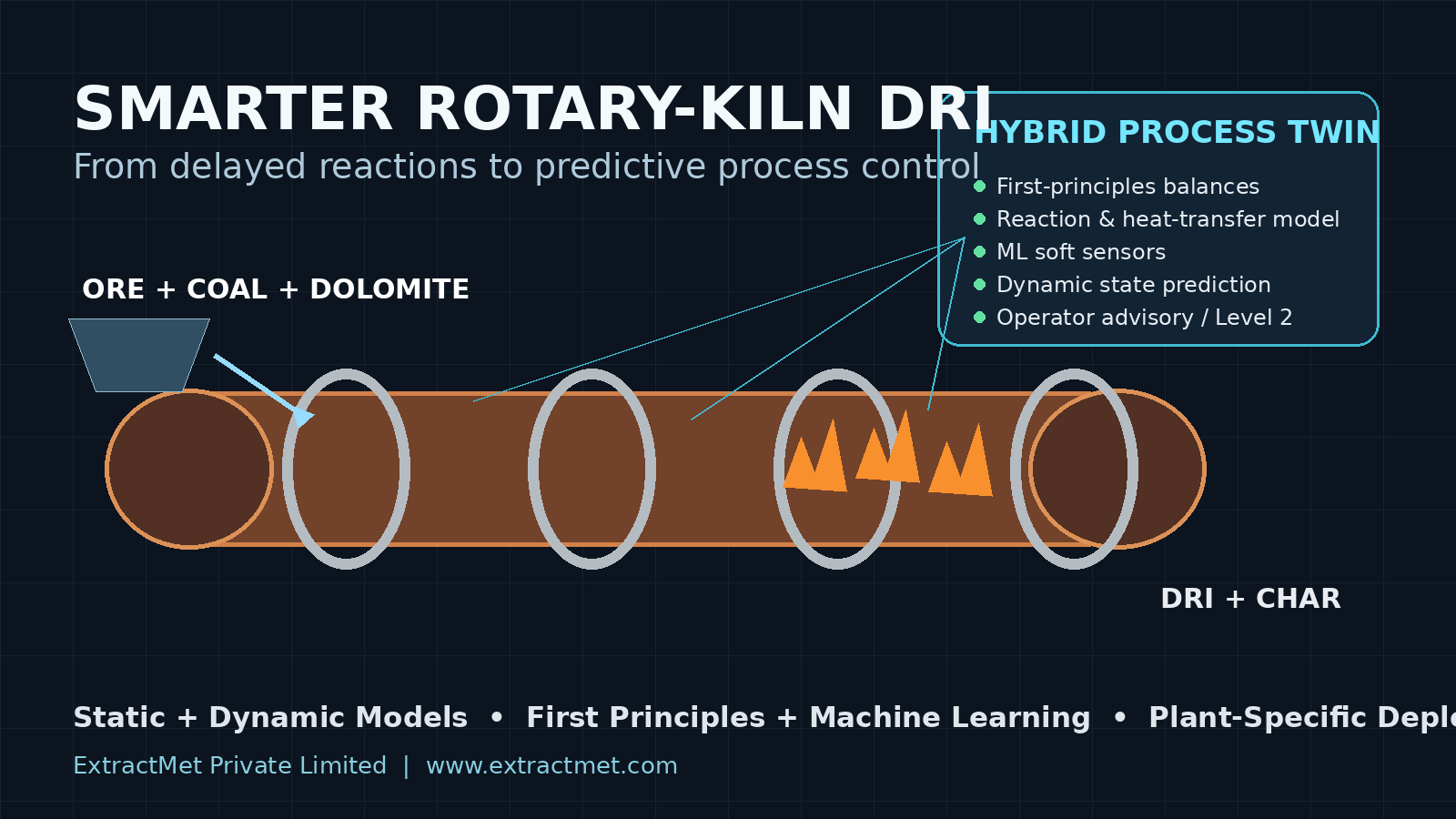
Figure 1. A hybrid digital operating layer links the physical rotary kiln to first-principles models, data-driven prediction and operator guidance.
A rotary kiln is a continuously moving high-temperature reactor with strongly coupled heat transfer, gas–solid reactions, coal devolatilization and combustion, burden motion and evolving gas chemistry. The operating window can be narrow.
A change in ore reducibility or size distribution can alter reduction kinetics. A change in coal fixed carbon, volatile matter, ash or reactivity can shift both the thermal balance and reducing potential. Air addition influences combustion, gas composition and local temperature. Kiln speed changes residence time. Feed-rate changes alter heat demand. Local over-temperature can accelerate sticking and accretion. Excessively conservative operation, on the other hand, can sacrifice productivity or metallization.
The process also has significant dead time. By the time a product sample confirms low metallization, the material that caused the problem may have entered the kiln much earlier. This makes purely reactive control inherently limited.
A useful Level-2 or digital-twin system should therefore answer questions such as:
Explore ExtractMet's online process-model demo hub.
The first layer is a rigorous static model. It provides a reconciled steady-state representation of the plant and establishes the physical discipline on which more advanced control can be built.
Depending on plant configuration and available measurements, the static model can include:
Material and elemental balances. Iron, oxygen, carbon, hydrogen, sulfur and ash-bearing streams are reconciled across ore, coal, dolomite, air, DRI, char, dust and off-gas.
Reaction calculations. The model represents the progressive reduction of iron oxides and relevant carbon/gas reactions, with plant-adjustable assumptions for reaction extent and utilization.
Heat balance. Sensible heats, reaction heats, coal combustion, gas losses, shell losses, feed heating and product heat are linked to determine whether the observed operating point is thermally self-consistent.
Product prediction. Metallization, DRI yield, carbon and related quality indicators can be related back to feed chemistry, reductant practice and thermal state.
Specific consumption benchmarking. Coal, ore, dolomite, air and energy indicators can be normalized per tonne of DRI to compare campaigns, shifts and raw-material combinations.
A well-built static model is valuable even before real-time deployment. It helps engineers perform scenario studies, identify inconsistent instrumentation, quantify the effect of raw-material changes and establish a transparent technical baseline.
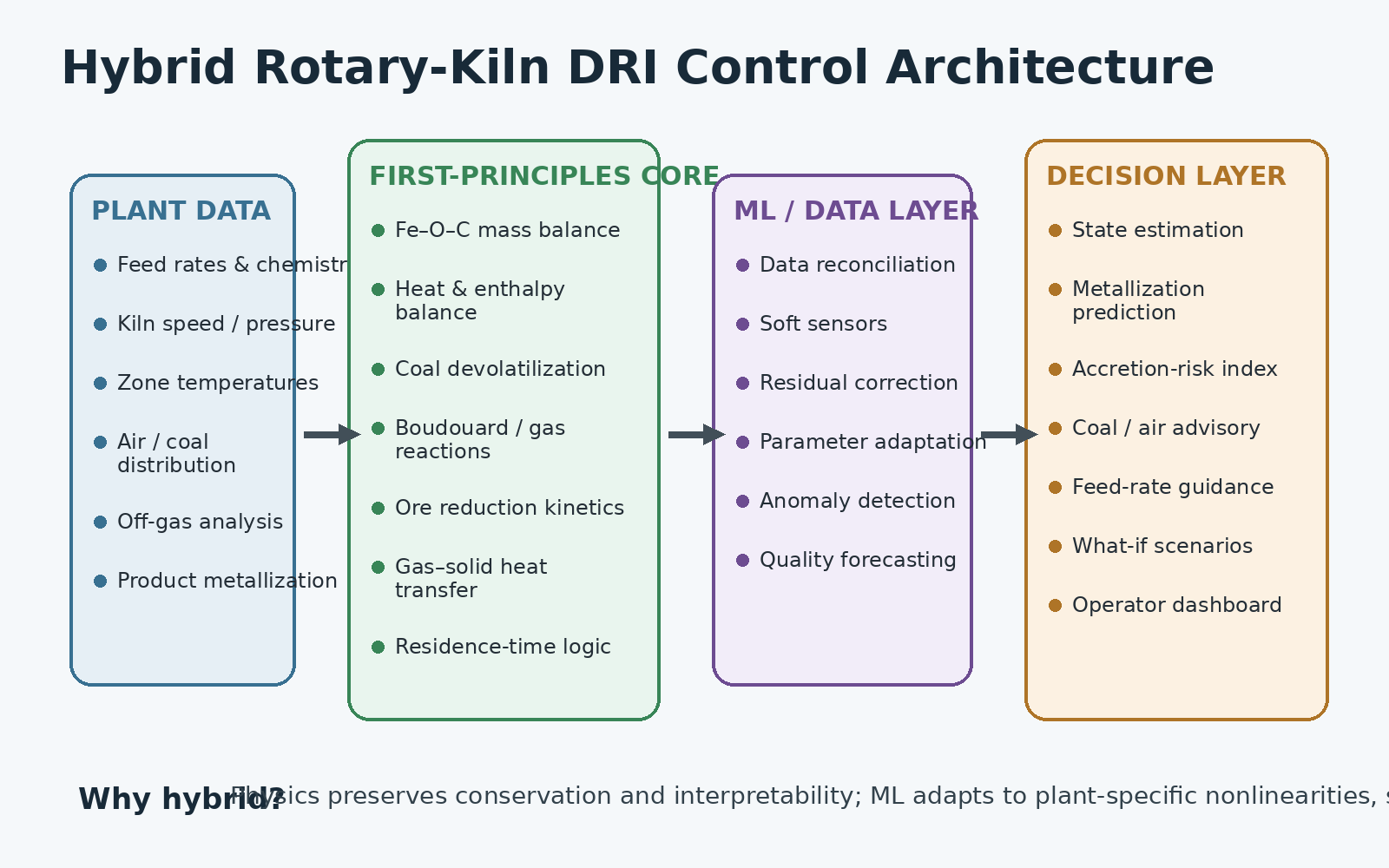
Figure 2. The hybrid architecture: plant data feeds a conservation-based physics core, while machine learning supplies adaptation, soft sensing and residual correction before predictions are converted into decisions.
A rotary kiln cannot be controlled optimally from inlet and outlet values alone. The process state evolves along the kiln length and over time.
A dynamic model divides the kiln into axial zones or computational cells and updates the state of solids and gas at each time step. Depending on the required fidelity, the model can track:
This creates something the operator normally cannot see directly: a virtual profile of the kiln interior.
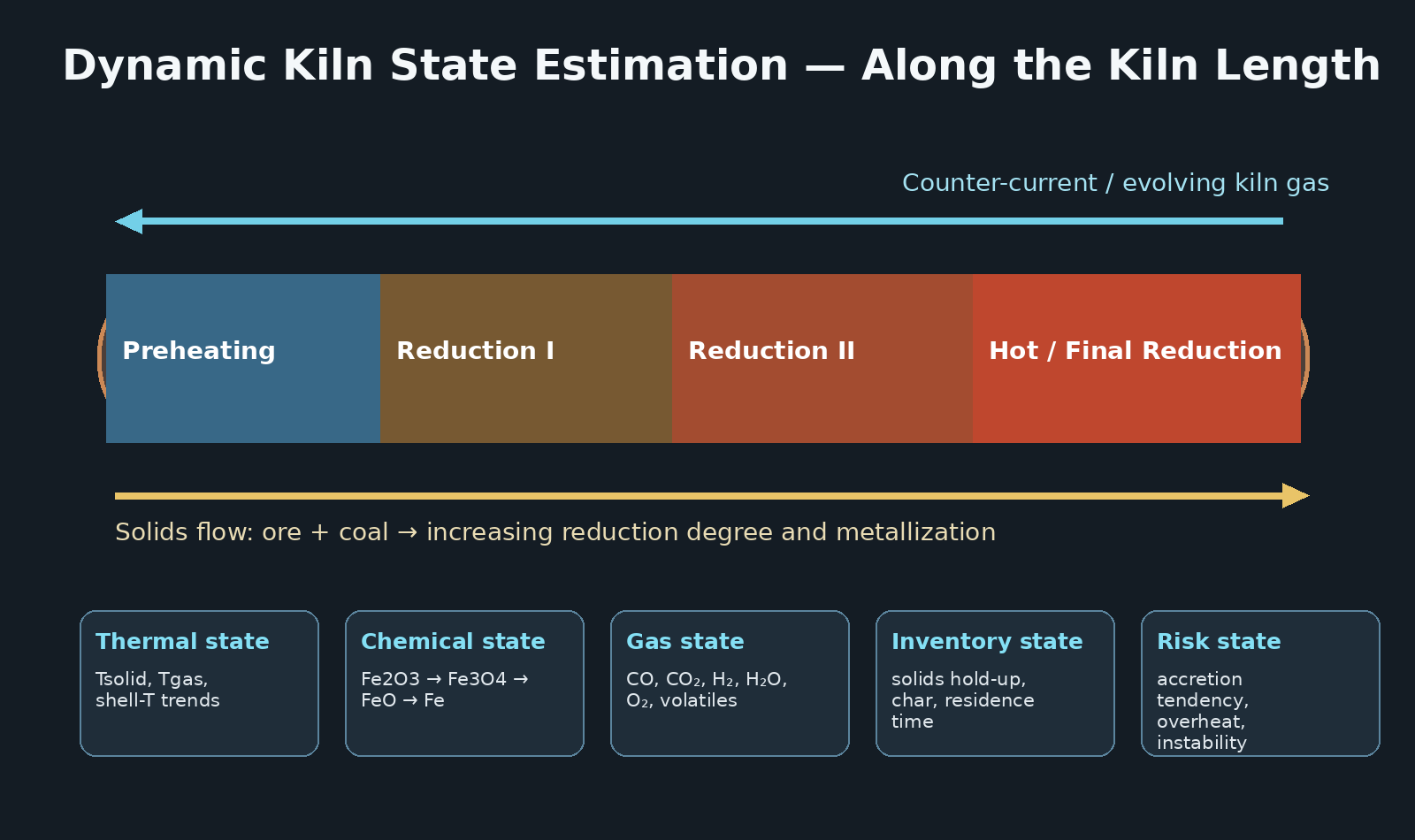
Figure 3. A dynamic model follows thermal, chemical, gas, inventory and risk states along the kiln rather than treating the plant as a single black box.
The value becomes especially clear during disturbances. If ore chemistry changes, coal quality shifts, a feeder drifts, or one air zone behaves abnormally, the model can estimate how the disturbance will propagate toward the discharge end. That creates time for corrective action.
Physics-based models provide conservation, interpretability and the ability to perform meaningful what-if calculations. But a real rotary-kiln DRI plant contains uncertainties that are difficult to model perfectly:
Trying to represent every uncertainty with a purely mechanistic model can make the model excessively complex and difficult to maintain.
This is where machine learning should be used — not to replace metallurgy, but to complement it.
A purely data-driven model may predict well inside the historical operating range, but it can struggle when the plant encounters a new ore blend, a different coal source, a new production rate, instrumentation changes or an unusual disturbance.
It can also generate correlations that violate conservation or that operators cannot interpret.
For an industrial control system, prediction accuracy alone is not enough. The model should also be physically credible, auditable and capable of supporting action.
That is why the hybrid architecture is attractive.
In an ExtractMet-style hybrid system, first-principles equations provide the process backbone and machine-learning models work around that backbone.
Typical ML functions can include:
Soft sensors. Estimate variables that cannot be measured continuously, such as discharge metallization, effective reduction degree, char inventory or an accretion-risk index.
Residual correction. Learn the systematic difference between a physics-model prediction and actual plant observations.
Parameter adaptation. Update uncertain parameters such as effective heat-transfer coefficients or reaction factors as raw materials and campaigns change.
Anomaly detection. Identify combinations of temperature, gas, feed and pressure behavior that differ from historically stable operation.
Quality forecasting. Predict product metallization and carbon before the product physically reaches the sampling point.
Recommendation ranking. Compare feasible operating actions subject to constraints and rank those most likely to restore the target state.
The result is neither a black-box AI system nor a rigid theoretical simulator. It is a plant-calibrated engineering model that can learn while remaining anchored to process physics.
See ExtractMet's digital-twin approach for metallurgical operations.
The most important question is not “Can the model predict?” It is “Can the model help the plant decide?”
A practical process-control layer can run through five stages:
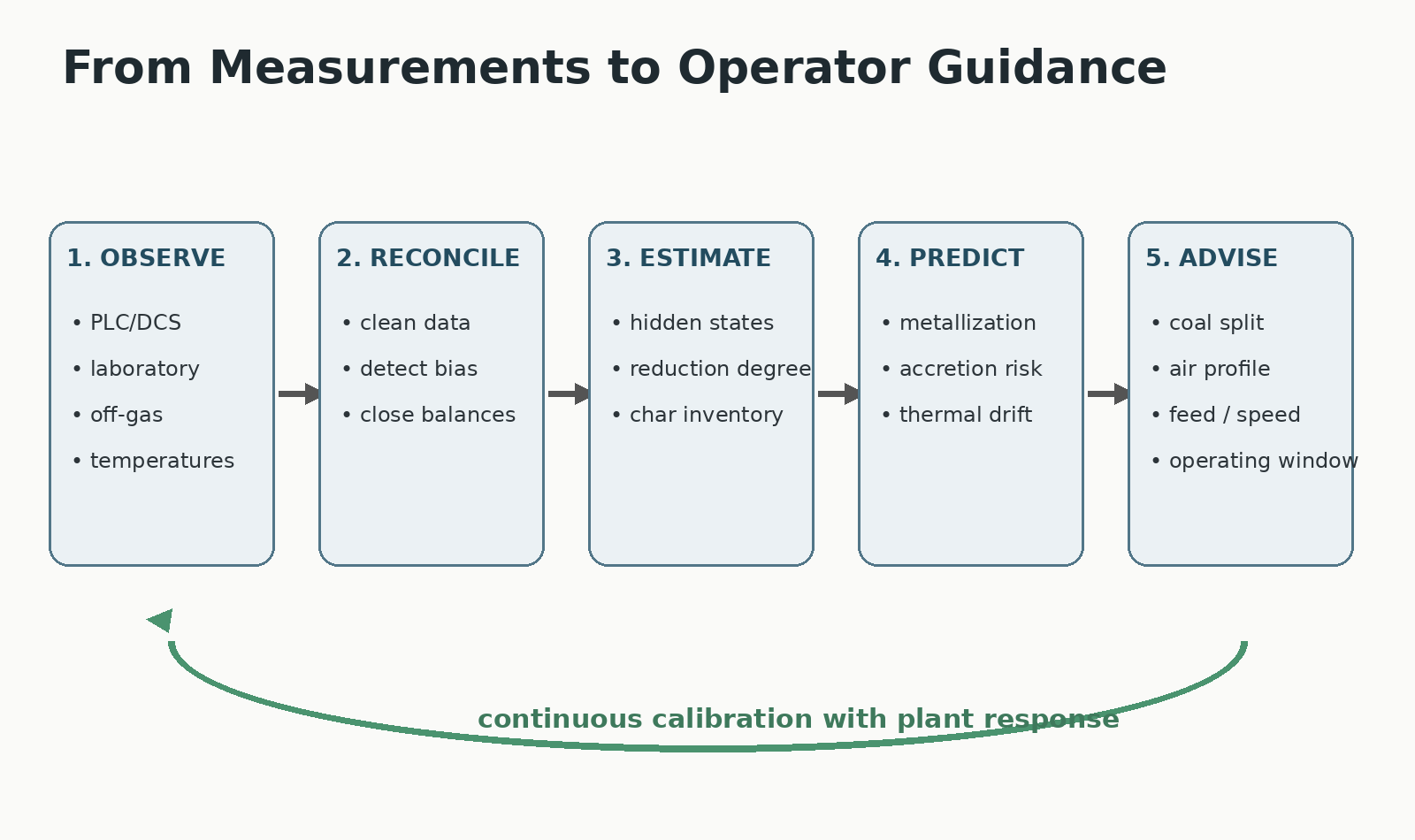
Figure 4. The model closes the information loop from measurements to state estimation, prediction and operator advice, then learns from the plant response.
Deployment does not need to begin with automatic closed-loop control. For many plants, the safest and most useful first step is shadow mode or advisory mode: the model runs online, produces recommendations, and its performance is compared with actual operation. Once reliability is demonstrated, integration can move toward semi-automatic or Level-2 supervisory control.
Every plant has a different economic bottleneck. Therefore, the model should be configured around the KPIs that actually matter.
Potential control and optimization targets include:
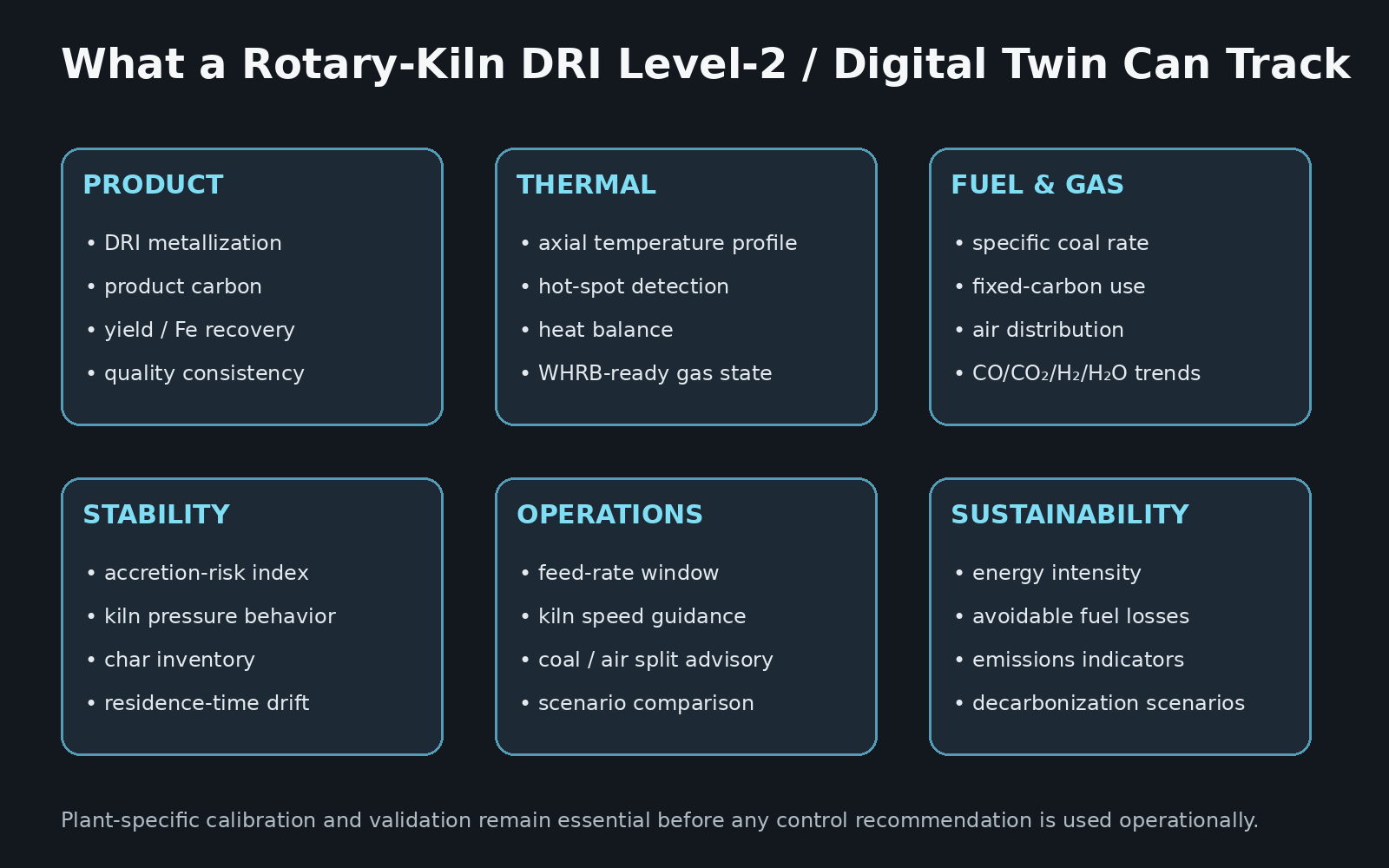
Figure 5. The Level-2/digital-twin layer can connect product quality, thermal state, fuel/gas behavior, stability, operating guidance and sustainability indicators.
The goal is not to optimize one number while destabilizing the rest of the plant. A useful system operates within a multi-variable operating envelope.
Accretion and ring formation are among the most disruptive problems in coal-based rotary-kiln DRI operation. They are influenced by thermal history, burden chemistry, ash behavior, local atmosphere, FeO-rich phases, residence time and operating practice.
A hybrid model can create an early-warning indicator from multiple sources rather than waiting for a single high-temperature alarm. For example, the system can combine:
The first-principles model helps explain why conditions are risky; the ML layer helps recognize how this particular plant behaves before an event.
This is exactly the type of problem where hybrid intelligence is more useful than either physics or data science used in isolation.
A credible deployment can be structured in stages.
Define the business problem and inspect available tags, laboratory records, raw-material analyses, historical production and downtime data. Establish data quality and identify the smallest high-value use case.
Build mass, elemental and heat balances. Reconcile representative operating points. Quantify current performance and identify missing or unreliable measurements.
Create the time- and position-dependent kiln model. Calibrate residence time, thermal behavior and reaction parameters. Develop soft sensors for product and internal-state variables.
Train residual models, quality predictors, anomaly detectors and adaptive parameters using historical plant data, with careful separation of training and validation campaigns.
Connect to plant data without changing control actions. Compare predictions and recommendations with actual operator actions and product outcomes.
Deploy alerts, what-if tools, recommended operating windows and shift dashboards. Integrate with historian, LIMS, PLC/DCS or higher-level systems as appropriate.
Monitor model drift, raw-material changes and sensor health. Recalibrate only where needed, while retaining version control and a traceable engineering basis.
Global DRI production reached a new record in 2024, and industry reporting attributes much of the growth to Indian rotary-kiln production. For operators, that growth brings a second challenge: producing more DRI is not enough. Plants must compete on quality consistency, fuel use, uptime, environmental performance and operating discipline.
The rotary kiln is particularly suited to a digital operating layer because many of its most important states are not continuously measurable. A validated model can convert sparse and delayed measurements into a coherent estimate of the process.
The opportunity is therefore not “AI for the sake of AI.” It is better metallurgy, made available to the operator continuously.
ExtractMet Private Limited works at the intersection of process metallurgy, mathematical modelling, plant-data analysis, AI/machine learning and digital twins. Our current online model portfolio includes a Rotary-Kiln DRI Control Model for tracking material movement, reduction progress, kiln thermal state, fuel and air practice, product metallization and operating stability.
For a client project, the model can be customized around the specific kiln geometry, raw materials, instrumentation, operating practices and KPIs of the plant.
Possible deliverables include:
View the ExtractMet Rotary-Kiln DRI model in the online demo hub.
Read more about ExtractMet's broader ironmaking process-intelligence approach.
A plant does not need to begin with a large digital-transformation program.
A strong first project can focus on one measurable question:
Can we predict metallization earlier?
Can we detect accretion risk before operators see a severe thermal signature?
Can we stabilize specific coal consumption without sacrificing quality?
Can we explain why one shift or raw-material campaign performs better than another?
Once that first use case is validated, the model can grow into a broader process-control platform.
Turn your kiln data into a live metallurgical decision system — not just another dashboard.
Direct Reduced Iron · DRI · Sponge Iron · Rotary Kiln · Process Control · Digital Twin · Machine Learning · Steel Industry · Ironmaking · Industry 4.0
A practical framework for using heat-and-mass balances, reaction models, dynamic state estimation and machine learning to predict metallization, improve kiln stability and support operators.