How physics-based modelling, plant data, digital twins and circular metallurgy can turn hidden process losses into measurable industrial value.
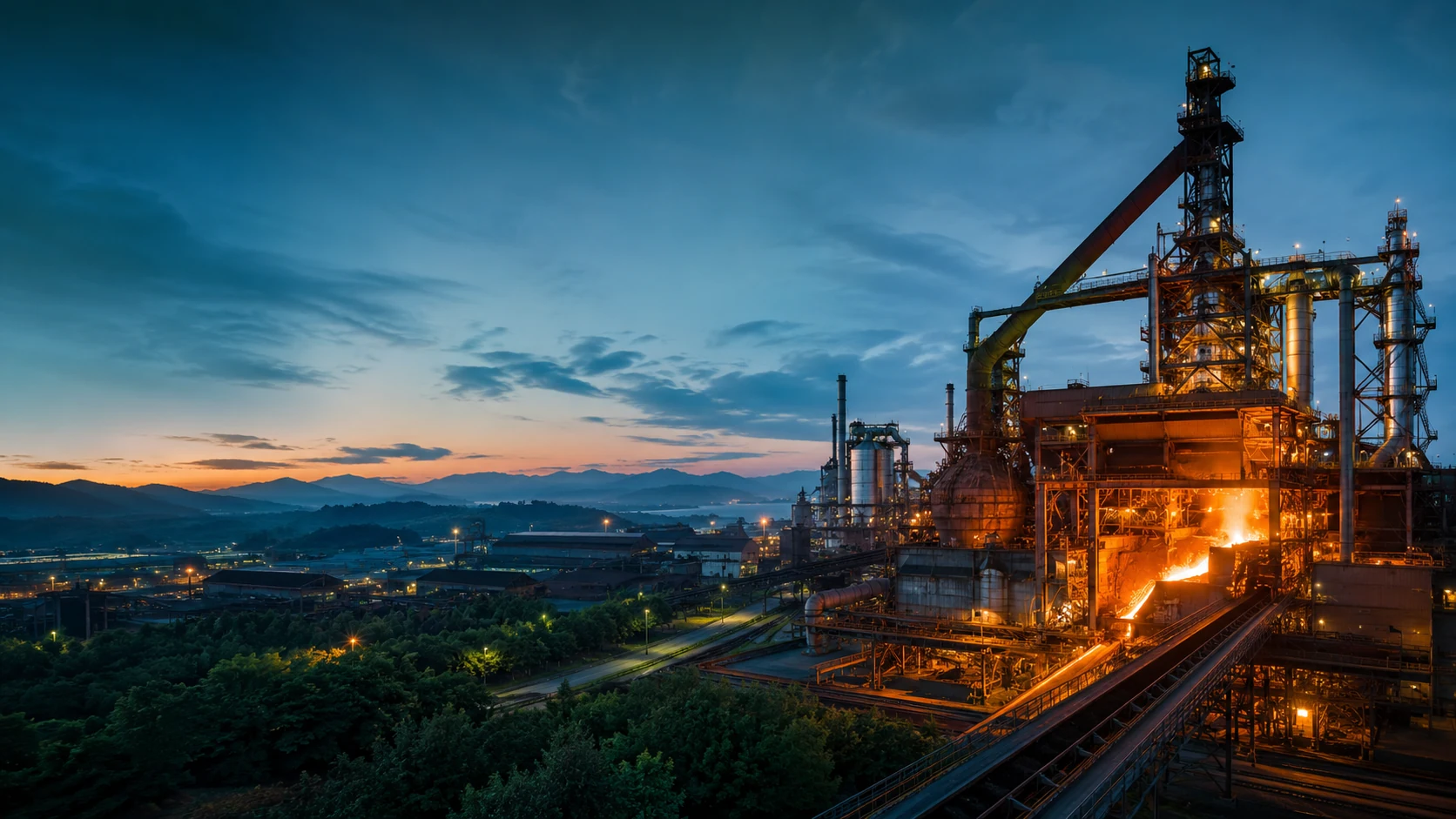
Cover image: A modern steel and metallurgical plant at dusk, representing the value hidden inside process intelligence. AI-generated editorial image created for ExtractMet.
A metallurgical plant can look stable from the control room while losing value every hour. The losses may be hidden inside excessive fuel consumption, unstable slag chemistry, inconsistent metallic yield, avoidable rework, off-specification production, refractory wear, unplanned downtime, slow diagnosis of process disturbances and conservative operating windows.
Individually, each loss may look manageable. Collectively, these losses can decide whether a plant remains competitive in a market shaped by higher energy costs, stricter environmental expectations, raw-material variability and increasing pressure to decarbonize.
The next competitive advantage in metals and mining will not always come from installing a new furnace or buying a new instrument. In many cases, it will come from using existing assets more intelligently: understanding what the process is really doing, converting plant data into engineering decisions and building plant-specific tools that help operators act with confidence.
Most industrial plants already generate large volumes of data: temperatures, power curves, oxygen flow, gas composition, pressure, furnace events, charge mix, process timings, laboratory chemistry, quality results and maintenance history. Yet many plants still struggle to answer the most important question: what should we do differently in the next heat, campaign or production cycle?
A trend line can show that a temperature has changed. It does not automatically explain why it changed, what metallurgical consequence it will create or which operating action will produce the best correction. True process intelligence is created when plant data is connected with first-principles metallurgical understanding.
That connection requires mass balance, heat balance, thermodynamics, reaction kinetics, transport phenomena, phase equilibria, laboratory validation and operator experience. Artificial intelligence and machine learning can add speed and pattern recognition, but they must be grounded in metallurgy to remain trustworthy on the shop floor.
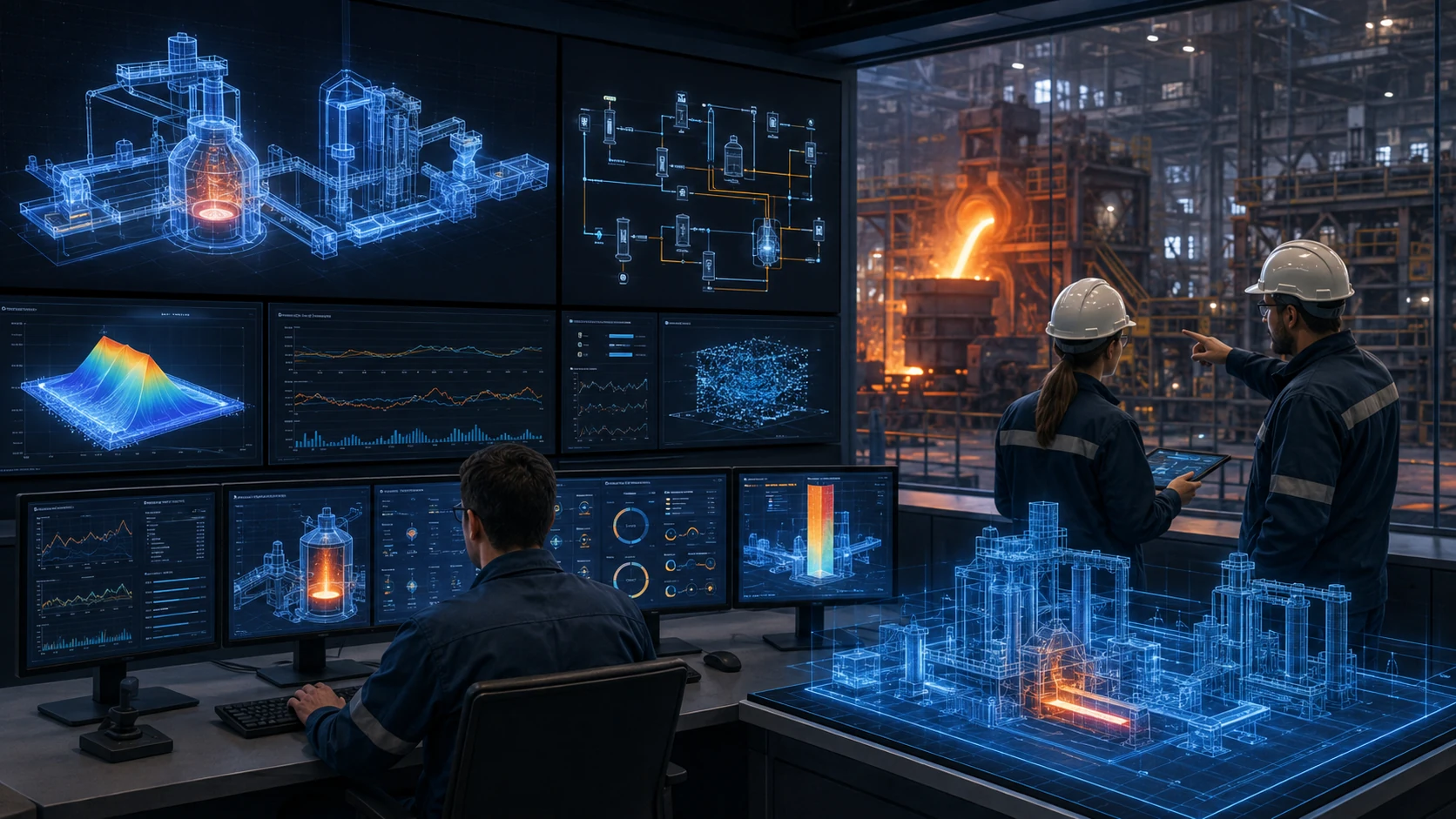
Digital twin image: Engineers using data dashboards and models to support practical plant decisions. AI-generated editorial image created for ExtractMet.
Effective process intelligence combines five layers. First, the plant needs a verified technical baseline: what materials enter, what products and residues leave, and where energy is consumed or lost. Second, the plant data must be cleaned, validated and interpreted against metallurgical constraints. Third, process models should translate raw measurements into meaningful variables such as utilization, recovery, thermal state, reaction extent, slag-metal equilibrium or risk of quality deviation.
Fourth, scenario simulation should help plant teams compare alternative operating strategies before trial implementation. Fifth, the results must be converted into practical formats: dashboards, decision-support tools, operator advisories, training modules, digital twins or techno-economic recommendations.
The purpose is not to replace operators. The purpose is to give experienced people sharper visibility, faster diagnosis and a defensible basis for process decisions.
In iron and steelmaking, value often hides in energy intensity, fuel rate, oxygen practice, slag foaming, hot-metal chemistry, DRI metallization, scrap quality, tapping temperature, secondary-metallurgy consistency and casting stability. In non-ferrous and ferroalloy operations, it may hide in reductant practice, furnace thermal balance, slag composition, metal recovery, refractory attack, dust generation, electrode behavior and off-gas utilization.
In mineral processing and critical-mineral extraction, value may hide in feed characterization, liberation, beneficiation efficiency, impurity control, reagent consumption, residue handling, selectivity and product qualification. In waste recycling, the key question is whether a residue can move from being an environmental liability to becoming a technically qualified secondary resource.
The common thread is that plant improvement requires an integrated view. A production problem, quality problem, energy problem and sustainability problem are often different expressions of the same process imbalance.
The phrase digital twin is used widely, but not every digital display is a useful decision-support system. A plant-ready digital twin should represent the process in a way that engineers and operators can trust. It should include relevant balances, reaction logic, operating constraints, calibration against plant data and a clear explanation of assumptions.
For example, an electric arc furnace tool should not only display power input. It should account for charge composition, DRI metallization, scrap melting, oxygen and carbon injection, slag foaming, chemical energy, heat losses, tapping temperature and operational sequence. A DRI shaft model should consider gas utilization, reduction chemistry, heat balance, metallization and gas-solid contact. A BOF model must respect hot-metal chemistry, scrap addition, oxygen blowing, slag formation, endpoint prediction and thermal balance.
When digital twins are built from metallurgical fundamentals and validated with plant data, they become more than visualization platforms. They become practical tools for scenario testing, abnormality diagnosis and operator training.
Metallurgical wastes and residues are increasingly important in a circular economy. Slags, dusts, sludges, tailings, mill scale, spent refractories and end-of-life materials may contain recoverable metals or useful mineral phases. However, technical possibility alone is not enough.
A serious waste-valorization project must answer practical questions. What is the chemistry and mineralogy of the residue? How variable is it over time? Which valuable phases are present? Are those phases liberated? What pretreatment is needed? Can the recovered product meet a buyer specification? What will happen to the remaining material? Is the overall process economically and environmentally defensible at the available scale?
The right pathway may involve characterization, beneficiation, pyrometallurgy, hydrometallurgy, product testing, environmental assessment and techno-economic modelling. The best solutions are those that connect process feasibility with a real market for the recovered product.
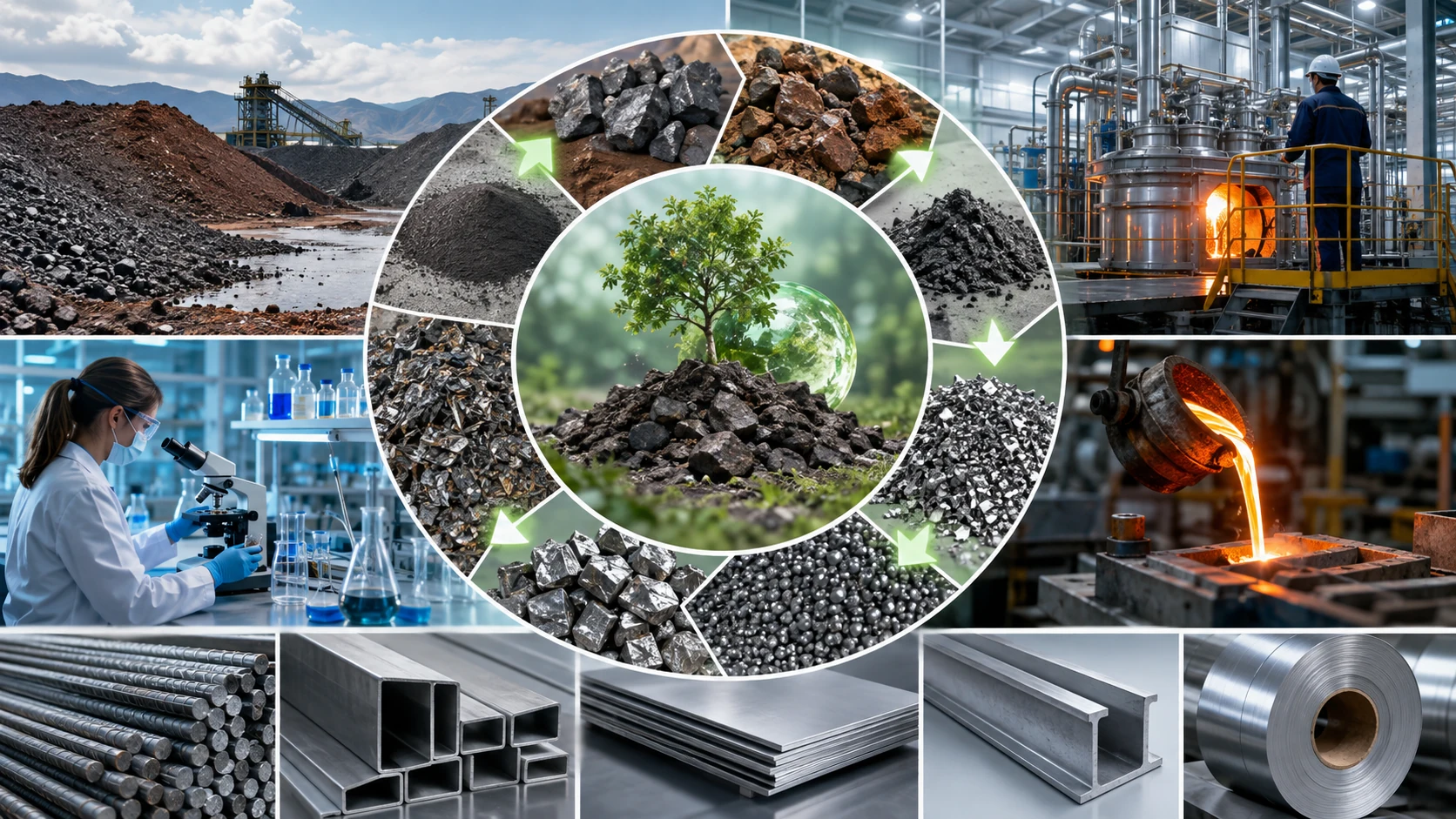
Circular metallurgy image: Residues, laboratory characterization, molten metal and finished products connected in a recycling cycle. AI-generated editorial image created for ExtractMet.
Battery materials, rare-earth magnets and energy-transition technologies are increasing demand for lithium, nickel, cobalt, manganese, graphite and rare-earth elements. Many promising recovery concepts begin in the laboratory, but scale-up is where the real test begins.
Industrial viability depends on feed variability, impurity behavior, reagent consumption, recovery, selectivity, water balance, residue management, equipment compatibility, product purity and buyer acceptance. A good flowsheet is not simply a sequence of unit operations. It is a risk-managed pathway from raw material to qualified product.
Companies planning critical-mineral or rare-earth projects therefore need a development programme that moves systematically from characterization to laboratory testing, process modelling, pilot validation, techno-economic assessment and implementation planning.
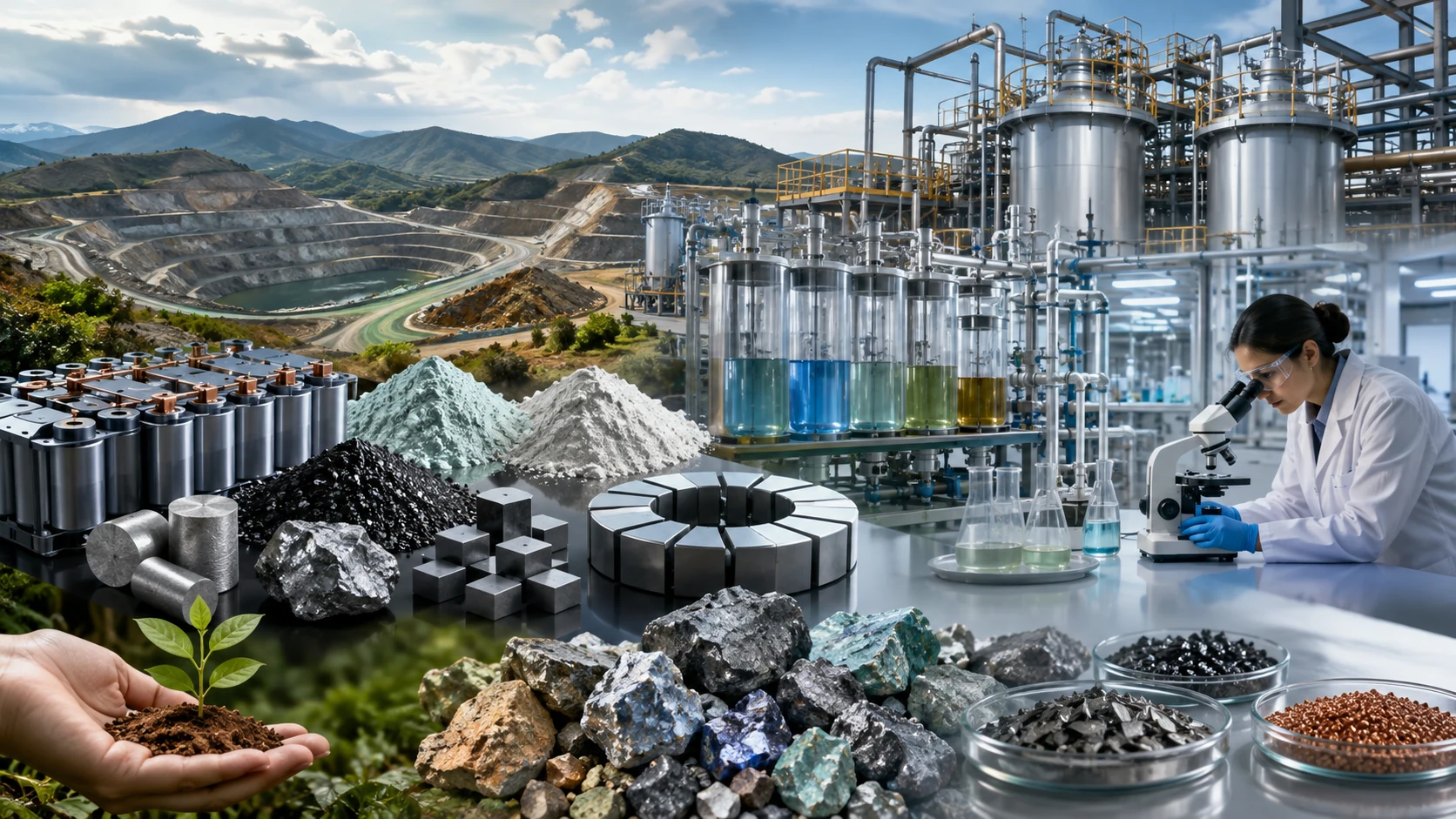
Critical minerals image: Mining, processing, laboratory testing and battery-material development. AI-generated editorial image created for ExtractMet.
Decarbonization in metals cannot be solved through one universal technology. A practical route depends on local energy cost, raw-material availability, existing equipment, product mix, emission boundary, hydrogen access, electricity source, scrap availability, capital constraints and operating reliability.
In one plant, the first step may be energy-efficiency improvement. In another, it may be scrap optimization, DRI route assessment, hydrogen integration, waste-heat recovery, renewable power linkage, carbon capture readiness, or improved yield and reduced rework. The most attractive projects are often those that lower emissions while also improving cost, stability or productivity.
This is why decarbonization roadmaps should be built from plant data and process engineering, not generic claims. The roadmap must show what can be implemented now, what requires trials, what needs capital investment and which indicators will prove success.
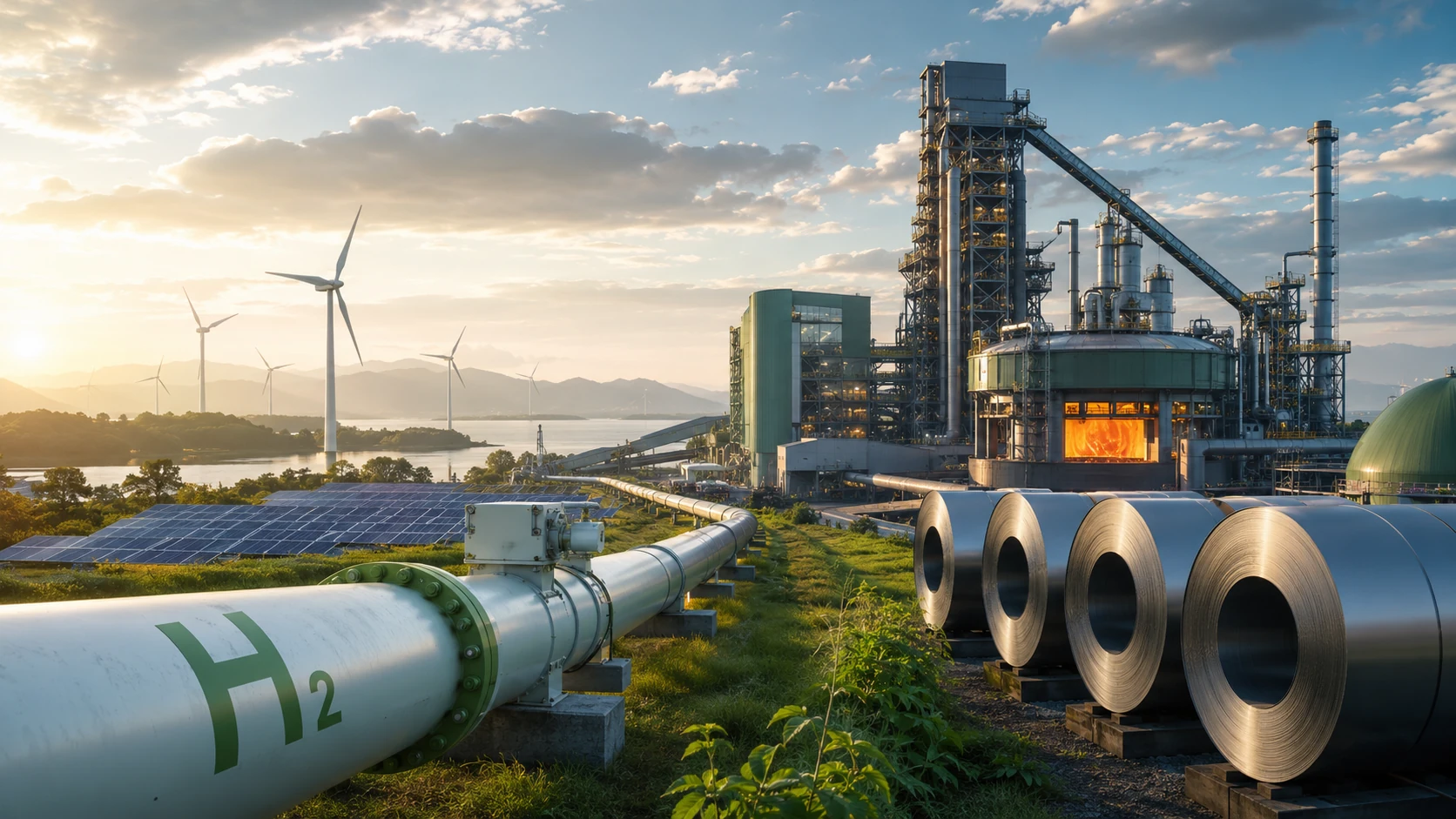
Green steel image: Hydrogen, renewable energy and steel production infrastructure. AI-generated editorial image created for ExtractMet.
ExtractMet Private Limited works at the intersection of metallurgical science, industrial data, mathematical modelling, process control, experimental studies, sustainability and implementation. The company supports metals, mining and mineral-processing organizations in solving shop-floor problems, developing process routes, evaluating waste-recovery opportunities and building plant-ready decision-support tools.
Our work covers process optimization, advanced control and digital twins; pyrometallurgical operational support; waste recycling and utilization; critical metals and rare earths; green steel and decarbonization; metallurgical testing and mineral characterization; R&D laboratory setup; high-temperature furnace design; training; and metals-and-mining market intelligence.
Every assignment should begin with the specific plant problem. The objective is to move from diagnosis to measurable improvement: better energy performance, higher recovery, more stable quality, lower waste, stronger operator capability and more defensible investment decisions.
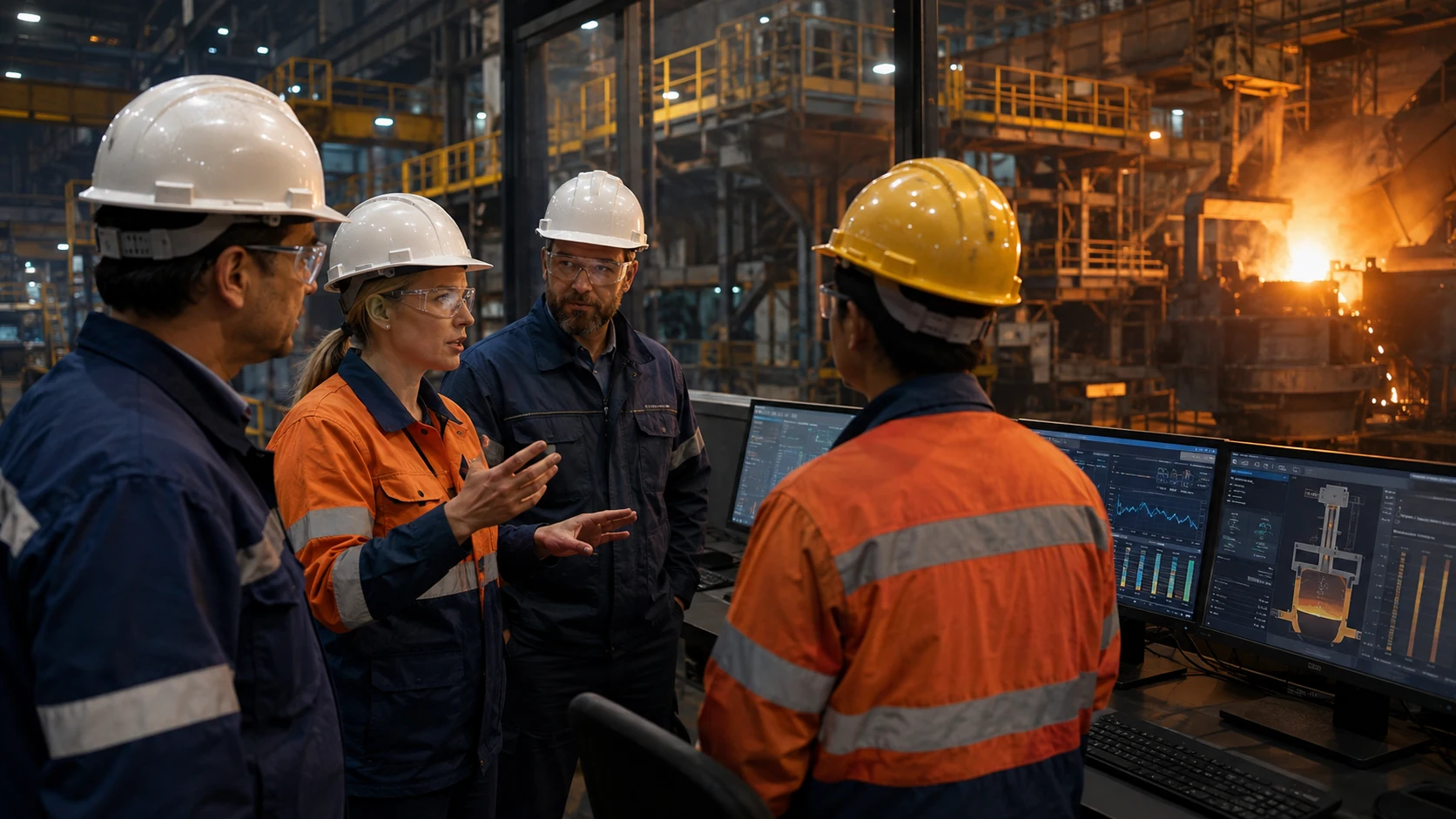
Plant team image: Engineers and operators discussing process dashboards beside an active steelmaking operation. AI-generated editorial image created for ExtractMet.
Explore ExtractMet capabilities
Industrial transformation does not always need to begin with a large digitalization programme or a major capital project. It can begin with one stubborn problem that has resisted routine troubleshooting.
Why is energy consumption varying? Why is metal recovery below expectation? Why is slag chemistry difficult to control? Why are similar heats producing different quality results? Can a waste stream become a saleable product? Is a proposed green-metal route technically and economically realistic? Can an existing model become a plant-ready tool?
These questions are excellent starting points because they are specific, measurable and close to value creation.
If your plant, project or R&D team is dealing with a difficult metallurgical process challenge, the first step is to define the problem clearly and build a technically defensible improvement pathway.
Bring us a plant problem, process-development opportunity, waste-recovery challenge, critical-mineral flowsheet idea, training requirement or decarbonization question. We will help convert it into an engineering conversation grounded in metallurgy, data and implementation reality.
Explore ExtractMet and start a technical discussion at https://www.extractmet.com.
Start a technical discussion with ExtractMet
Preview title: Metallurgical Process Intelligence: The Next Advantage in Metals
Preview subtitle: A practical roadmap for turning plant data, process modelling, waste streams and decarbonization goals into measurable industrial outcomes.
Suggested Medium URL slug: metallurgical-process-intelligence-metals-mining
Medium topics: Steel, Mining, Manufacturing, Sustainability, Artificial Intelligence